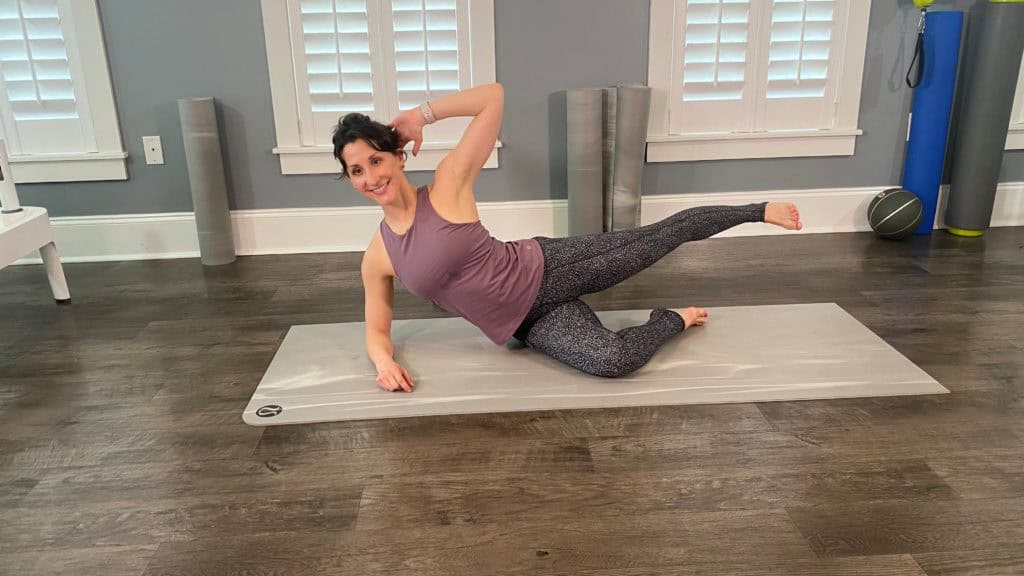
The difference between yoga and Pilates is what each one asks your body to do. Yoga holds a shape and works on flexibility, breath, and balance. Pilates moves through a shape with control, training the deep muscles that stabilize your spine, hips, and shoulders. Yoga tends to open; Pilates tends to strengthen. Most people who try both end up keeping both. If you can only start one, start with the one that addresses what is bothering you now.
Two methods built for two different problems
Yoga is old. It grew up in India over thousands of years as part of a much larger practice that also includes breath work, meditation, and philosophy. The postures most Americans picture when they hear the word are one piece of that tradition, and the piece that travels best into a sixty-minute class at a gym or studio.
Pilates is young by comparison. Joseph Pilates developed his method in the early twentieth century, working first with people who were injured or confined to bed, and he built spring-loaded equipment so that someone lying down could still work against resistance. That origin explains most of what a Pilates class looks like today. The work is precise, it is scaled with springs rather than willpower, and it was designed around rebuilding a body rather than stretching one. We keep a longer account of the man who invented the method if the history interests you.
Both are now taught in dozens of versions, from candlelit and slow to loud and sweaty. What follows describes the mainstream of each, not every class you will ever walk into.
The real difference between yoga and Pilates is what each movement is for
In yoga, the shape is the point. You move into a posture, you stay there, and the work happens while you hold it: tissue lengthens, balance steadies, the breath slows down. Progress often looks like getting further into the same shape than you could last month.
In Pilates, the shape is a frame for something else. You get into position and then add a challenge. A leg extends. A spring pulls. The carriage underneath you wants to slide and your job is to not let it run away. The work happens in the controlled part, and in the slow return. Progress usually looks like the same exercise done slower, with less wobble, and with the muscle that is supposed to be working actually doing the job.
That one distinction explains almost every other difference between the two.
| Question | Yoga | Pilates |
|---|---|---|
| Main aim | Mobility, flexibility, breath, a calmer head | Core strength, stability, joint control |
| How a movement works | Hold a posture and breathe into it | Move through a range against resistance, then control the way back |
| Equipment | Mat, blocks, straps, bolsters | Mat, or reformer, tower, chair, and barrel |
| Breathing | Usually through the nose, with the breath leading the movement | Usually in through the nose and out through the mouth, timed to the effort |
| Class size | Often large, a floor of mats | Small wherever equipment is involved; eight reformers here means eight people |
| What it is not | Not a strength program on its own | Not a flexibility program, and not cardio in the running sense |
What a yoga class usually looks like
You arrive with a mat, you work barefoot, and the teacher leads the room through a sequence. In a slower class you may hold six or eight shapes for a minute or more each. In a flow class the postures are stitched together so the room keeps moving with the breath. Props appear when a shape is out of reach today: a block under a hand, a strap around a foot.
Almost all of the resistance is your own body weight, and the teacher usually works from the front of the room rather than standing over any one person. That is why yoga scales to large rooms so well, and it is also the reason a beginner can spend a few months quietly doing a posture in a way that does not serve them.
One more practical difference: a yoga class rarely asks you to arrive early for an orientation, while any studio putting you on equipment will usually want a few minutes with you first.
What a reformer Pilates class looks like
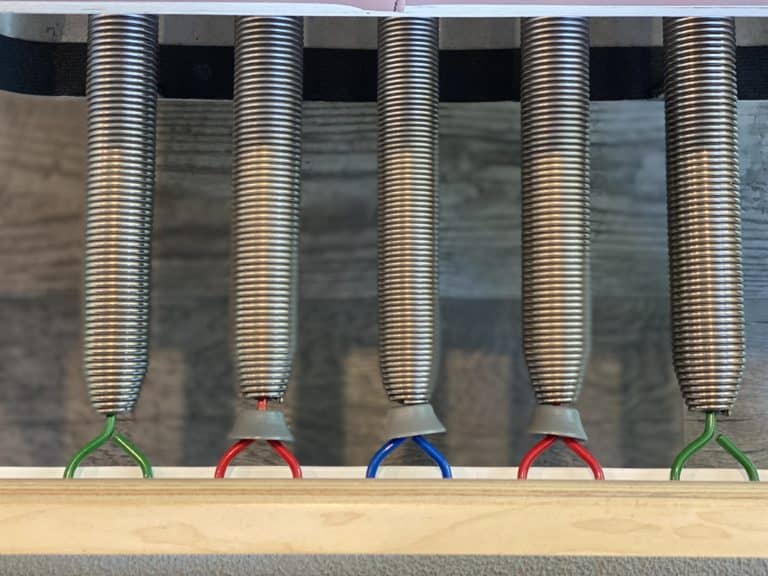
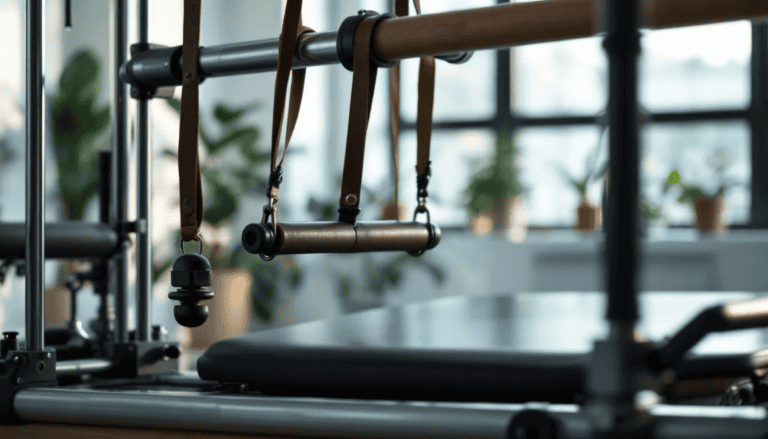
A reformer is a low, padded carriage that slides on rails inside a frame. Springs at one end set the resistance, a bar at your feet and a pair of straps at your hands give you something to push and pull against, and the whole thing sits at about hip height when you stand beside it. It can look a bit like a medieval contraption the first time you see one. It is not. It is a bed that pushes back, and the springs make the work easier about as often as they make it harder.
A class runs as a sequence of exercises, most of them done lying down, kneeling, or standing on the carriage. The instructor changes your spring load, your foot position, or your range so that the same exercise fits a first-timer and a ten-year regular in the same hour. Nobody is watching you. Everyone is busy.
The reformer is one of several pieces of apparatus, and the others do different jobs, which we lay out in the four kinds of Pilates equipment and who each one suits. Room size is the other thing worth asking about before you book anywhere: our studio caps every class at eight people on eight reformers, and how a capped group class actually runs walks through what that cap buys you minute by minute.
The styles you will see advertised, decoded
Both words cover a wide range, and the label on the schedule tells you more than the practice name does.
On the yoga side, vinyasa and power classes keep moving and raise your heart rate; hatha is slower and more instructional; yin holds a small number of shapes for minutes at a time; hot classes add a heated room, which changes how a stretch feels but does not change what the posture trains.
On the Pilates side, classical studios run the original order of exercises Joseph Pilates taught, while contemporary studios adapt it. Reformer classes use the machine, mat classes do not, and some studios build faster, circuit-style hours that borrow the equipment, which we explain in our rundown of HIIT Pilates. If you are comparing two schedules, compare the style and the class size, not the two words on the sign.
Breath and core do not mean the same thing in each room
Both practices talk constantly about breath and core, which makes them sound closer than they are.
In yoga, the breath is usually the metronome. It sets the pace of the sequence, it is typically taken in and out through the nose, and in many traditions it is the point of the practice rather than an accessory to it. Core work tends to appear as a by-product of balance and of holding yourself up.
In Pilates, the breath is a tool for the specific effort in front of you. You generally inhale through the nose to prepare and exhale through the mouth on the hardest part, because that exhale helps the deep abdominal wall engage. And core means something narrower than a six-pack: the transverse abdominis that wraps the waist, the pelvic floor underneath, the muscles that stack your ribs over your hips. Those are the muscles that keep your back quiet while you carry a toddler through a parking lot.
What each one changes, and how long that takes
Expect the first changes to be ones only you can feel. After three or four Pilates classes most people notice they can find their abdominals on demand and that standing up straight takes less effort. Visible change comes later, and it comes from frequency more than from any single exercise. Twice a week for two months does more than an intense week does.
Yoga’s early wins show up as range: hamstrings that let you reach further, hips that tolerate sitting cross-legged, shoulders that stop creeping toward your ears. For a fuller account of what the method does over a season, we wrote up what regular Pilates does to the body over time.
The toning question deserves a straight answer, because it is the one most people are really asking. Muscle definition comes from loading a muscle, and spring resistance through a full range loads more than body weight held still does. That is the honest case for the reformer, and we make it in detail in what reformer work changes that a yoga mat does not.
Choose the one that matches what is bothering you now
Forget which is better in the abstract. The useful question is narrower: what do you want to be different in two months? Name the complaint, then pick.
- My lower back aches by the afternoon. Start with Pilates. Most desk-related back complaints are a stability problem before they are a flexibility problem.
- I feel stiff and tight everywhere. Start with yoga, and add Pilates once the range is back.
- I want to feel stronger without lifting heavy. Pilates, on equipment rather than on a mat.
- I need the hour to quiet my head. Yoga, in a slower style.
- I keep tweaking something when I run or play tennis. Pilates, because single-leg control is most of what it trains.
- I want better balance as I get older. Either, and both together beat either alone.
If Pilates is your answer, the next fork is mat or equipment, and that choice changes what your first class feels like far more than the studio you pick. We compare them in mat class or reformer class first. If you have never done either, a beginner’s guide to Pilates in Mount Pleasant is the gentler on-ramp.
If you are pregnant, injured, or coming back from something
This is where the comparison stops being academic. Both practices are often recommended during pregnancy and after injury, and both can be the wrong call on a given week. Pregnancy changes which positions are comfortable and which are advisable, and it changes them again each trimester, which is the subject of our guide to prenatal reformer Pilates, trimester by trimester.
Two rules hold whichever practice you choose. Tell your instructor before class, not halfway through it, and tell them specifically: a disc issue, a replaced hip, a shoulder that dislocates. And if you are managing something significant, start one-to-one rather than in a group. We will steer you toward private reformer classes first in that case, and we would rather say so now than have you book the wrong thing. Anything your doctor or physical therapist has restricted stays restricted; an instructor works inside those limits, not around them.
Doing both in the same week
The two practices cover each other’s gaps well enough that most long-term students stop choosing. A workable week is two Pilates classes and one yoga class, with the Pilates sessions separated by a day. If you ever stack them on the same day, do Pilates first while you are fresh and sharp enough to control the small movements, then let the yoga lengthen what you just worked.
One caution. Pilates teaches you to hold your trunk still while your limbs move; plenty of yoga asks for exactly the opposite, which is mobility through the spine. Both are useful. Let each class be what it is, rather than trying to do Pilates inside a yoga room.
Starting Pilates in Mount Pleasant
Pilates of Charleston has been teaching on South Shelmore Boulevard since 2011, under the same owner, who has taught Pilates for more than twenty years and films for Dynamic Pilates TV. Charleston City Paper readers voted us Best Pilates Studio in 2023 and 2024, and we are nominated again for 2026. Forty-seven five-star reviews sit on our Google Business Profile. We serve Mount Pleasant, Daniel Island, Isle of Palms, Sullivan’s Island, and downtown Charleston.
The practical details are deliberately simple. Eight reformers, eight people, no exceptions to the cap, and the cap is published right alongside the rates. Classes are bought as passes with a monthly membership, and there is no long-term contract to sign. The one policy we will not bend is cancellation, which holds for weather and traffic too; it is spelled out with everything else in our studio FAQ, including the cancellation policy.
We are at 778 S. Shelmore Blvd, next to Langdon’s and Wood & Grain, with Second State coffee next door for the fifteen minutes before class. You can check directions and parking at the studio or send the studio a message with your question about which class to book. If you are not sure which one to pick, say so when you write; it is a more common message than you would think. Tell us the complaint you named above and we will put you in the right room.
Frequently asked questions
Which one is better, yoga or Pilates?
Neither is better in general; they are better at different things. If your goal is flexibility, breath, and a calmer head, yoga gets you there faster. If your goal is core strength, posture, and control of your joints, Pilates does. Pick by the goal you can actually name today, give it six to eight weeks of steady attendance, and then reassess.
Why is Pilates harder than yoga?
It often feels harder at first because the work is small, slow, and nearly continuous. You rarely get the pause that a held posture gives you, and the muscles being asked to work, such as the deep abdominals, the hip stabilizers, and the ones around your shoulder blades, are usually the ones you have used least. Springs can also make a movement easier, which is why a good instructor adjusts your load rather than telling you to push through it.
Do you get more toned from yoga or Pilates?
Definition comes from loading a muscle and from how often you show up, not from a studio’s name. Pilates loads muscles against spring resistance through a full range, which is why people often notice change in the abdominals, glutes, and arms after a couple of months of twice-weekly classes. A strong power yoga practice can do similar work with body weight. Frequency matters more than the label on the door.
Should I do Pilates or yoga first?
If you mean in the same day, Pilates first and yoga second suits most people: you do the controlled strength work while you are fresh, then use the yoga to lengthen what you just trained. If you mean which to take up first, start with whichever addresses the complaint you have right now, stiffness or weakness, and add the other once the first one feels like a habit.
Is there a difference between yoga mat classes and Pilates mat classes?
Yes, even though the mats look identical. A yoga mat class is built around postures held for several breaths and often linked into a flow. A Pilates mat class is a sequence of short, controlled exercises, most of them done lying down, with the abdominals working for most of the hour. Pilates mat work also leans on small props such as rings, bands, and light weights more than yoga typically does.