Is yoga or Pilates better for toning? If what you want is visible muscle definition, Pilates usually gets you there faster, because the work is built around resistance that can be increased week to week. Yoga builds real strength too, and it beats Pilates on flexibility, balance, and the quiet-the-mind side of training. But toning is a muscle question, and muscle responds to load. That is the short answer. The longer one is about what kind of load, how often, and what a reformer does that a mat on the floor cannot.
What people actually mean by “toning”
Toning is not a kind of muscle. When someone says they want to look toned, they usually mean two things at once: enough muscle to give the body shape, and a thin enough layer of body fat for that shape to show. The first comes from training a muscle against resistance. The second comes mostly from what happens outside the studio, in food, sleep, and how much you move the rest of the day.
That matters for the comparison, because it means the real question is not which class melts fat. It is which class builds and holds muscle in a way you will keep doing. Consistency is part of the answer. A class you like and attend three times a week beats a theoretically better class you quit in a month.
Why Pilates usually wins on toning, and where yoga is better
Yoga works mostly against your own bodyweight and gravity. Holding a plank or a warrior pose is real strength work, and over time it builds endurance in the muscles that keep you upright. What it cannot easily do is get heavier. Once your bodyweight stops being a challenge in a pose, the pose has nothing more to offer you.
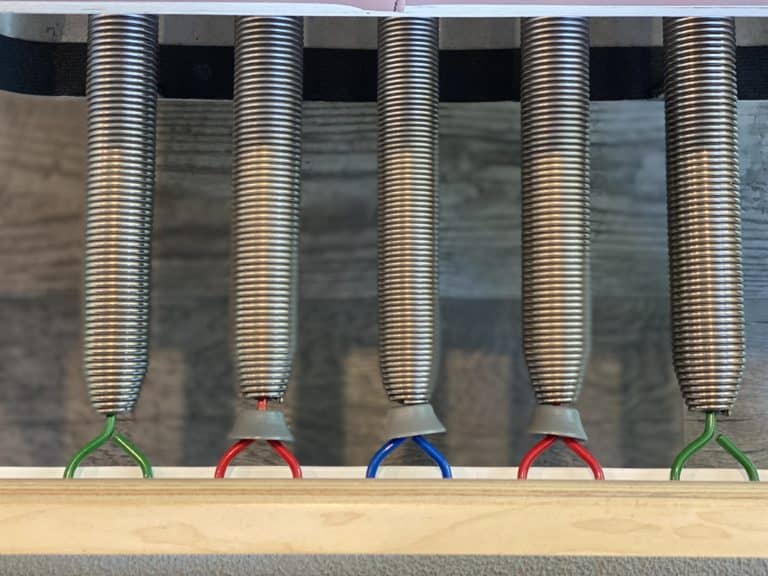
Pilates is built around adjustable resistance and a slow, controlled tempo. On a reformer, springs supply the load and the instructor changes it. Ten deliberate repetitions against a spring that genuinely challenges you keep the muscle working for longer than a fast set does, and that sustained effort is what asks a muscle to adapt.
Yoga still wins on things worth having: range of motion through the hips and shoulders, single-leg balance, and a breathing and stillness practice that Pilates does not really attempt. We walk through that trade in the full comparison of what yoga and Pilates each change. Plenty of our clients do both, and that combination is a sensible one rather than a compromise.
What a reformer adds that a yoga mat does not
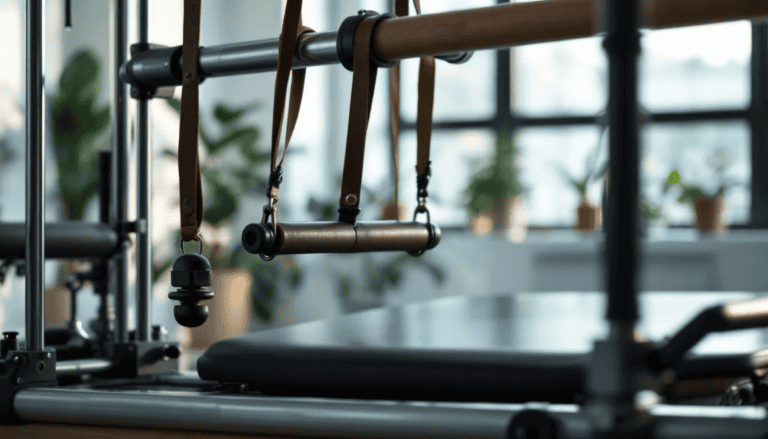
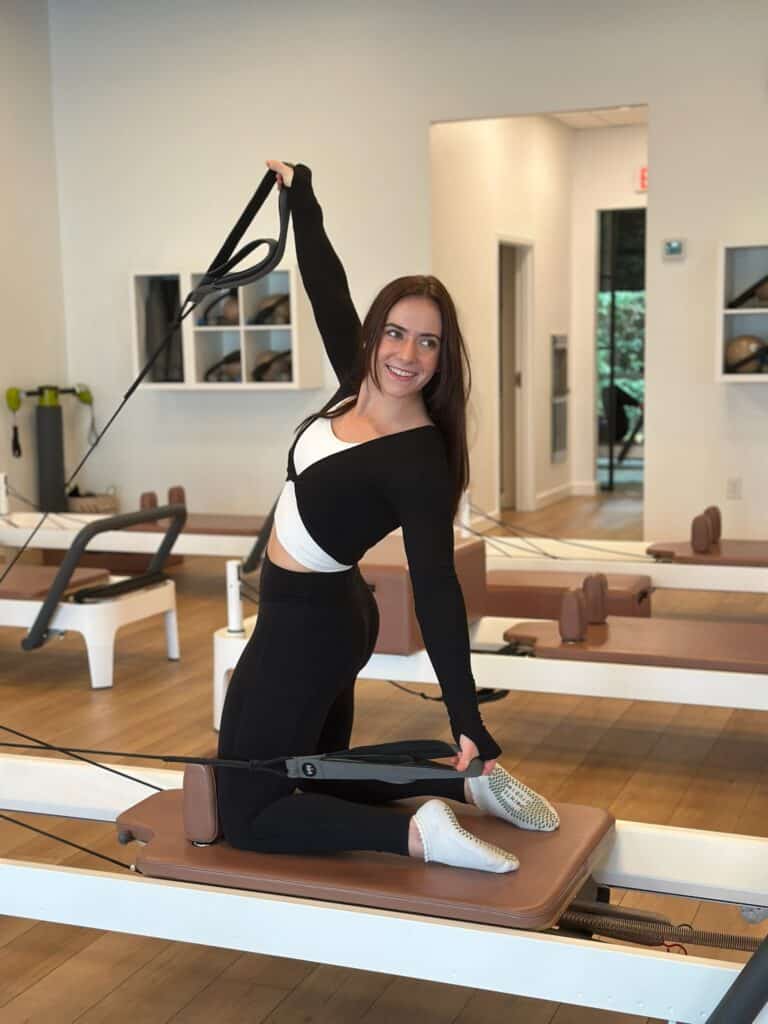
If you have never seen one, a reformer is a low padded carriage that slides along rails inside a wooden frame, with springs underneath it and straps at either end. It can look a bit like a medieval contraption at first glance. It is really the most adjustable piece of strength equipment in the room.
Three things those springs do that a floor mat cannot:
- Load you precisely. Spring tension changes in small steps, so the same exercise can be made harder as you get stronger. That steady progression is the engine behind any change in muscle shape.
- Work the lowering half of the movement. The springs pull back, so your muscles have to control the return rather than only the lift. Controlling a muscle as it lengthens under load is a large part of what builds definition.
- Assist as well as resist. Springs can take weight out of an exercise, which means someone on their first day can do the real movement correctly instead of a watered-down version of it.
That is also why mat work and reformer work are not interchangeable, and why the order you try them in matters. If you are deciding where to begin, we wrote a piece on whether to book a mat or a reformer class first.
What a toning-focused month actually looks like
Two or three reformer classes a week, with a day between the hard ones, is a reasonable rhythm for most people starting out. Add walking or whatever cardio you will genuinely do, and keep sleep and protein in the picture. Nothing visible happens in two classes. The people who notice a change are the ones still showing up eight weeks later.
The sessions themselves should feel specific rather than like a scramble of repetitions: footwork, bridging, arm springs, long stretch. If you want a structure you can follow between classes, our guide to building core strength with Pilates step by step lays one out.
What that looks like in a Mount Pleasant studio
Pilates of Charleston is a boutique reformer studio at 778 S. Shelmore Blvd, next to Langdon’s and Wood & Grain, with Second State coffee next door for the part of the morning that happens before class. Eight reformers, eight people, no more. The cap is published alongside every rate. The point of it is that someone is watching your spring setting and your alignment, and that supervision is what decides whether resistance work builds strength or just leaves you tired. Eight reformers and eight people describes how one of those classes runs from start to finish.
The studio has been open in Mount Pleasant under the same owner since 2011, was voted Charleston City Paper’s Best Pilates Studio in 2023 and 2024, and is nominated again for 2026. Classes are bought as passes with a monthly membership, and there is no long-term contract to sign. Clients come from Mount Pleasant, Daniel Island, Isle of Palms, Sullivan’s Island, and downtown Charleston.
One thing to settle before a first class: tell your instructor about any injury or anything you are currently managing, before you get on the reformer. If it is significant, start with a private reformer session, so the work can be built around it properly instead of adapted on the spot in a group.
Where to start if definition is the goal
Lead with the reformer, because it is the one that progresses. Keep yoga for mobility, balance, and the days you want to move without counting anything. If you have never been on a reformer and the idea feels like something everyone else already knows how to do, that is the most common feeling in the room, and our beginner’s guide to Pilates in Mount Pleasant covers what the first hour involves.
When you are ready to pick a class time, contact the studio and say it is your first one. Eight weeks from now, you will either have a practice or a longer search history. The first class is the only genuinely hard part.
Frequently asked questions
Is yoga or Pilates better for belly fat?
Neither one removes fat from a chosen spot, because the body does not let you pick where it loses it. What both do is build and keep muscle, and losing body fat overall comes mostly from food, sleep, and total daily movement. Pilates has the edge on the muscle half of that, since the resistance can be increased over time. Treat any class that promises to target your stomach specifically with suspicion.
Which is harder, Pilates or yoga?
They are hard in different ways. Yoga asks you to hold positions and to move through a wide range of motion, which can be very demanding if you are stiff. Pilates asks for small, controlled movement against spring resistance, and people are often surprised by how much a light spring takes out of them. Most beginners find their first reformer class harder than their first yoga class, mostly because the muscles involved are ones they have not deliberately worked before.
Does Pilates burn fat or just tone?
Pilates burns some energy like any movement does, but it is a strength practice rather than a fat-burning one, and it is best thought of that way. Its contribution is the muscle you build and keep, which is what gives the body shape once body fat comes down. Most people pair two or three Pilates classes a week with walking or another form of cardio.
Will Pilates flatten my stomach?
Pilates trains the deep abdominal muscles and the ones that support your spine, and that work changes how you hold yourself, which often reads as a flatter middle fairly quickly. Whether a visible change follows depends on body fat, which Pilates alone does not control. Posture improvements can show up within a few weeks; definition takes longer and depends on what happens the rest of the week.
Can I do yoga and Pilates in the same week?
Yes, and many people get the best of both that way. A common pattern is two or three reformer classes for strength, plus a yoga class for mobility and recovery on a day in between. They do not cancel each other out; they cover different ground, so pick the balance that matches what you want most right now.