Why Pilates Is One of the Best Ways to Build Core Strength
Pilates for core strength is one of the most effective methods for building a stable, powerful midsection — and it goes far deeper than crunches or sit-ups ever could.
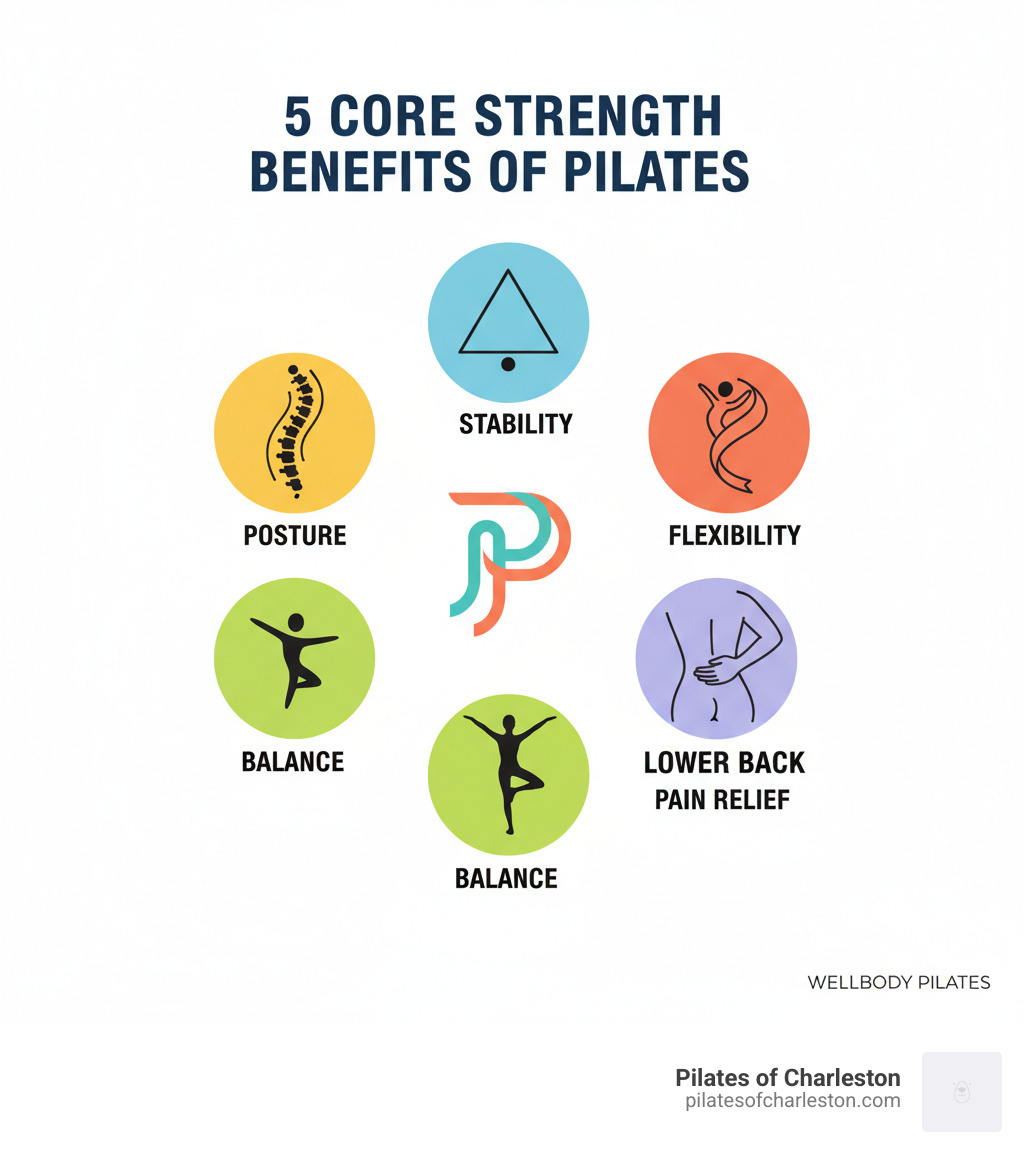
Here’s a quick overview of what Pilates delivers for your core:
| Benefit | What It Means for You |
|---|---|
| Improved posture | Stronger muscles support your spine and keep you upright |
| Enhanced stability | Deep core training steadies your pelvis and spine |
| Increased flexibility | Controlled movement builds strength through a full range of motion |
| Better balance | A strong core keeps you grounded in everyday movement |
| Reduced lower back pain | Core muscles take the load off your spine and joints |
Pilates targets the deep stabilizing muscles — like the transverse abdominis and pelvic floor — that most traditional workouts simply don’t reach. These are the muscles that hold everything together, whether you’re sitting at a desk in Mount Pleasant or pushing through a tough workout.
The best part? You don’t need to be a fitness expert to start. Pilates works for beginners, active athletes, and everyone in between.
Whether you’re a Charleston local looking to shake up your routine or someone dealing with nagging back pain, this guide breaks down exactly how to build real core strength with Pilates — in 7 clear, actionable steps.
The Benefits of Pilates for Core Strength
When we talk about pilates for core strength, we aren’t just talking about getting a “six-pack.” In our Mount Pleasant studio, we focus on the “Powerhouse.” This term, coined by Joseph Pilates, refers to the center of your body—the area from the bottom of your ribs to the line across your hip joints. Strengthening this area provides a literal foundation for every movement you make.
The benefits of a strong powerhouse are life-changing. First, there is posture. By developing balanced core muscles that support the spine, Pilates helps you stand taller and sit straighter, which is a game-changer for those of us spending long hours at desks in downtown Charleston.
Then there is stability and balance. Pilates trains the deep muscles to stabilize the pelvis and spine, reducing the “wobble” in your daily life. This increased stability directly leads to a reduced risk of lower back pain. Because weak core muscles are often a primary contributor to back issues, Pilates targets the muscles that take the strain off your joints. According to scientific research on core stabilization, these exercises are essential for maintaining a healthy, injury-free back.
How pilates for core strength targets deep muscles
Unlike traditional ab exercises that often hit only the surface-level “rectus abdominis” (the crunching muscle), Pilates dives deeper. We target the transverse abdominis (TVA)—the deepest abdominal layer that wraps around your waist like a natural corset.
We also engage the pelvic floor and the multifidus (tiny muscles along the spine). This combination creates a “belt” of support that protects your internal organs and stabilizes your skeleton. By fostering a strong mind-body connection, we teach you how to activate these muscles intentionally, ensuring that your core is working for you even when you’re just walking down King Street. You can learn more about how these deep muscles transform your body here.
Steps 1-2: Master Your Breath and Alignment
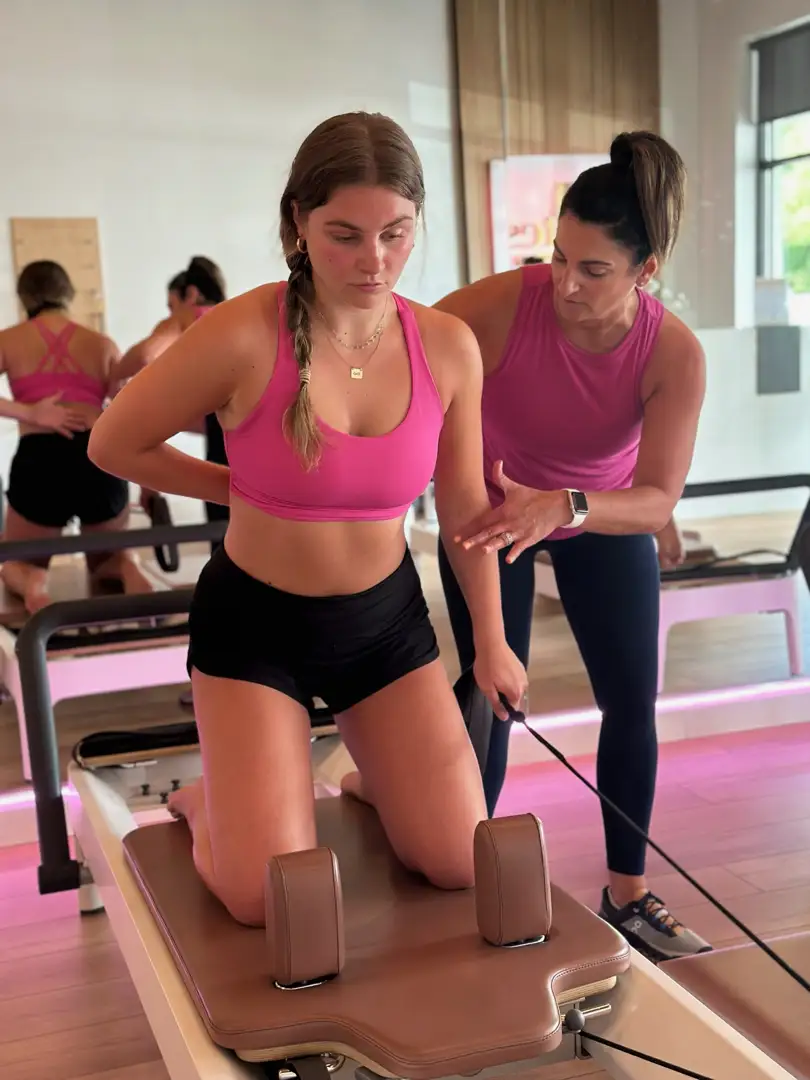
The first step in any pilates for core strength journey isn’t a movement; it’s a breath. In Pilates, we use lateral breathing. Instead of breathing into your belly (which relaxes the abs), we inhale deeply into the sides and back of the rib cage.
On the exhale, we focus on the “scoop”—drawing the belly button back toward the spine and up toward the diaphragm. This keeps the core engaged even as you take in oxygen. This technique is vital for protecting your back during more challenging moves.
Step 2: Finding Your Neutral Pelvis
Alignment is our second step. We often talk about a neutral pelvis. This is the position where your spine maintains its natural lumbar curve, and your hip bones and pubic bone are level.
A common way we test this is by placing the heels of our hands on our hip bones and fingertips on the pubic bone to form a triangle. If the triangle is flat, you’re in neutral! From here, we move into the tabletop position (knees over hips at a 90-degree angle), which requires significant core control to maintain without arching the back. For a deeper dive into these fundamentals, check out our Technique Tip Tuesday: Ribs & Abs.
Avoiding common beginner mistakes
One of the biggest hurdles for beginners is the “more is better” trap. In Pilates, quality always beats quantity.
- Arching the back: If your lower back leaves the mat during leg movements, your core has disengaged.
- Neck strain: Many people pull from their neck during chest lifts. We teach you to initiate the lift from your upper abs instead.
- Rushing: Moving too fast uses momentum rather than muscle.
If you’re feeling overwhelmed, don’t worry! Everyone starts somewhere. Understanding what Pilates is is the first step toward mastering these nuances.
Steps 3-5: Activation, Control, and Posterior Strength
Step 3: The Hundred
Now we get to the “gold standard” of Pilates: The Hundred. This exercise is designed to build abdominal endurance and warm up the lungs. You lie on your back, curl your head and shoulders up, and pump your arms vigorously for 100 pumps. You inhale for 5 pumps and exhale for 5 pumps. It sounds simple, but by the time you hit 60, you’ll feel exactly why this is so effective for building a stronger midsection.
Step 4: Toe Taps and Pelvic Stability
Step four focuses on control. From a tabletop position, you slowly lower one foot to tap the floor and then bring it back up. The challenge isn’t moving the leg; it’s keeping your pelvis perfectly still while the leg moves. This teaches the core to stabilize the spine against the weight of your limbs.
Step 5: The Glute Bridge and Spinal Articulation
A strong core includes the back of the body, too! The glute bridge is essential for posterior strength. As we lift the hips, we focus on spinal articulation—peeling the spine off the mat one vertebra at a time. This strengthens the hamstrings and glutes while stretching the front of the hips, which is a perfect antidote for the “sitting all day” lifestyle common in West Ashley and Mount Pleasant.
Why pilates for core strength beats traditional crunches
Standard crunches often involve a lot of “cheating” with the hip flexors or neck. Pilates uses isometric contractions (holding a position) and dynamic movements (moving while holding a position) to create functional strength. Expert insights suggest that Pilates exercises are superior for toning the abdomen because they require the muscles to work as a cohesive unit, stabilizing the lumbar and pelvic area like a supportive belt.
Steps 6-7: Stability and Consistency in Mount Pleasant
Step 6: Planks and Oblique Work
The sixth step involves moving into more global stability moves, like the forearm plank. In Pilates, we don’t just “hold” a plank; we actively pull the belly button up and reach through the heels to engage the entire “powerhouse.” We also incorporate side bends and side planks to target the obliques, which are crucial for rotational strength and spine support. You can see our favorite plank variations and tips here.
Step 7: Consistency and the Right Environment
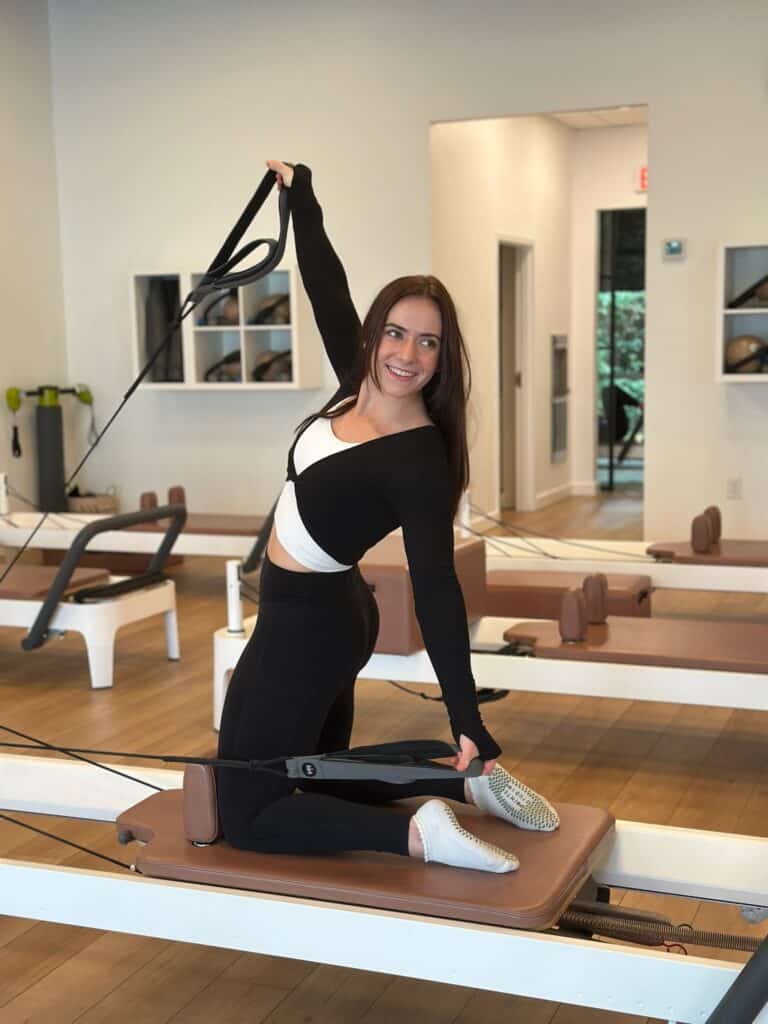
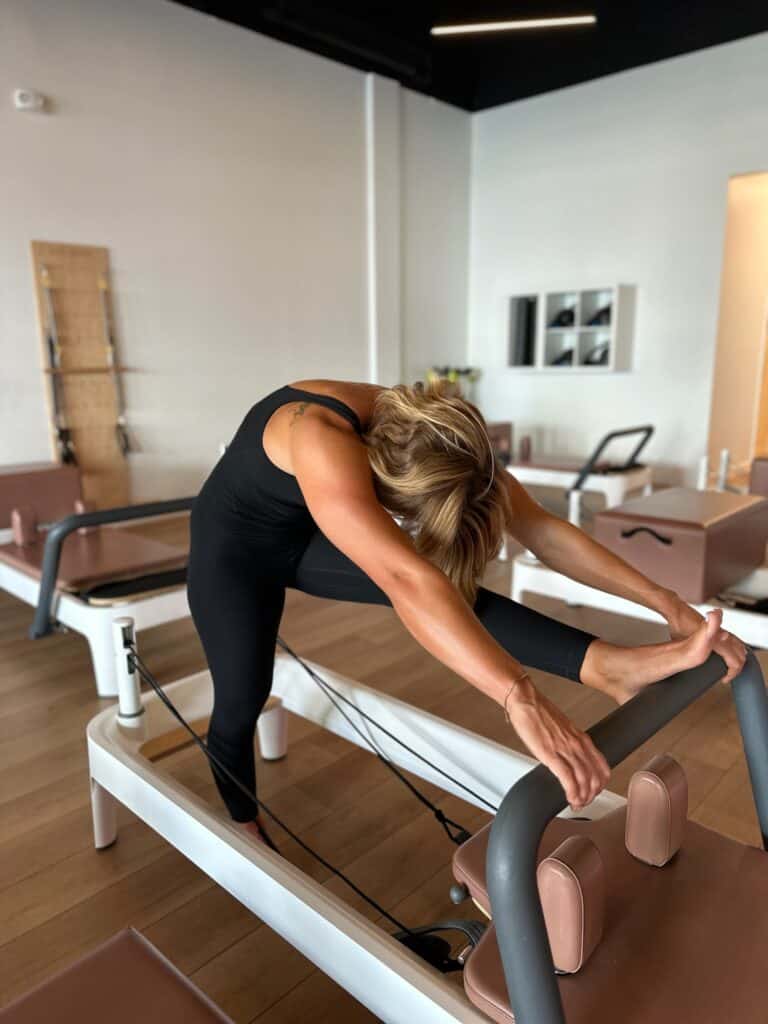
The final step is the most important: consistency. To see real results, we recommend 2-3 sessions per week. Whether you prefer the resistance of a Reformer or the foundational work of a Mat class, staying regular is what builds muscle memory.
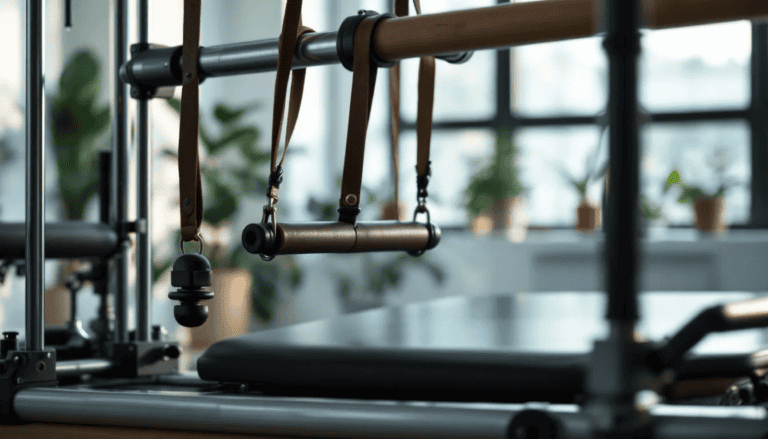
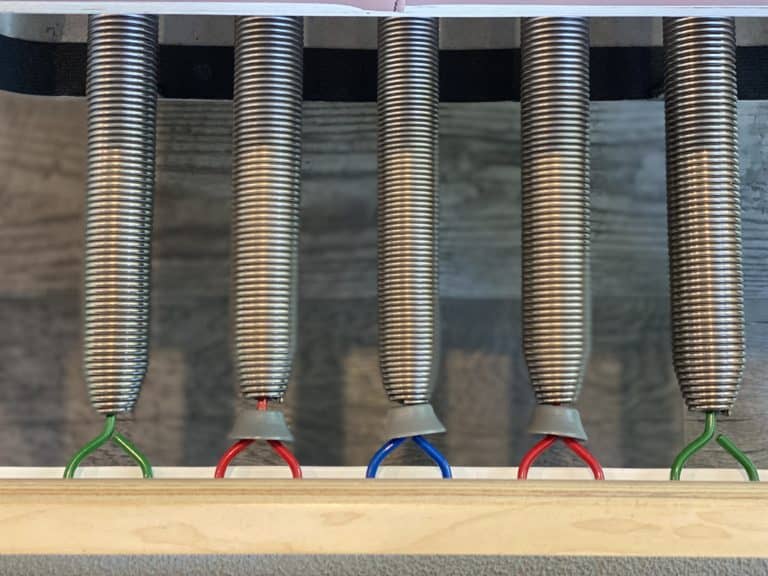
At Pilates of Charleston, we focus on the Balanced Body Allegro 2 Reformer, which adds a layer of challenge through spring resistance that you just can’t get at home. Mixing your routine between mat work and reformer classes provides a well-rounded approach to fitness.
Modifications for all fitness levels
One of the reasons we love teaching Pilates in the Charleston area is its inclusivity.
- Seniors: We focus on moves that improve balance and mobility, helping maintain independence and prevent falls.
- Postpartum: Pilates is excellent for safely rebuilding the pelvic floor and deep abdominals after pregnancy.
- Injury Prevention: By focusing on low-impact, scalable moves, we help clients recover from injuries and prevent future ones.
Whether you’re a beginner or an athlete, Pilates is a “smart” workout that adapts to your body’s needs. If you’re wondering how it compares to other mindful movements, check out our guide on Pilates vs Yoga.
Frequently Asked Questions
How often should I do Pilates to see results?
For most people, the “sweet spot” is 2 to 3 times per week. This frequency allows your body to build muscle memory and strength without overtraining. Consistency is key! Many of our clients at Pilates of Charleston notice a difference in their posture after just a few weeks of regular circuit classes.
Is pilates for core strength safe for seniors?
Absolutely! Pilates was originally designed for rehabilitation. Because it is low impact, it is incredibly gentle on the joints while being highly effective for building the core strength needed for balance and independence. We love seeing our senior community members in Mount Pleasant stand taller and move with more confidence. There are many safe exercises for all ages that we can adapt to any fitness level.
What equipment do I need for an at-home workout?
While our studio is equipped with top-of-the-line Reformers, you can start at home with very little. A high-quality mat is the most important piece. As you progress, you might add a small ball, a resistance ring (sometimes called a Magic Circle), and grip socks to prevent slipping. For those just starting, a simple 20-minute mat routine is a great way to build the habit.
Conclusion
Building a strong core isn’t just about aesthetics—it’s about how you feel every single day. From the moment you wake up in Daniel Island to your evening walk on Sullivan’s Island, a strong powerhouse supports your every move.
At Pilates of Charleston, we are proud to be the premier boutique studio serving the Mount Pleasant and greater Charleston community. Our results-driven, contemporary approach ensures that every minute you spend on the Reformer is purposeful. With our energetic instructors and supportive atmosphere, we make the journey to a stronger core both effective and fun.
Whether you are in North Charleston, the Isle of Palms, or right here in Mount Pleasant, we invite you to experience the difference a dedicated Pilates practice can make.
Ready to transform your core and stand taller? Join our supportive community at Pilates of Charleston in Mount Pleasant! Book your first class today by calling (843) 608-8660 or visiting our About Page to meet our expert team. We can’t wait to see you on the Reformer!