If you have typed “reformer Pilates Charleston SC” into a search bar, you probably want three things answered before you book: what actually happens in the room, how paying for it works, and whether you will be the only beginner there. Short answers: you work on a spring-loaded machine called a reformer, you buy a drop-in class or a class pack, with no membership and no contract, and at Pilates of Charleston a class never holds more than eight people.
What reformer Pilates in Charleston, SC is, and what the machine does
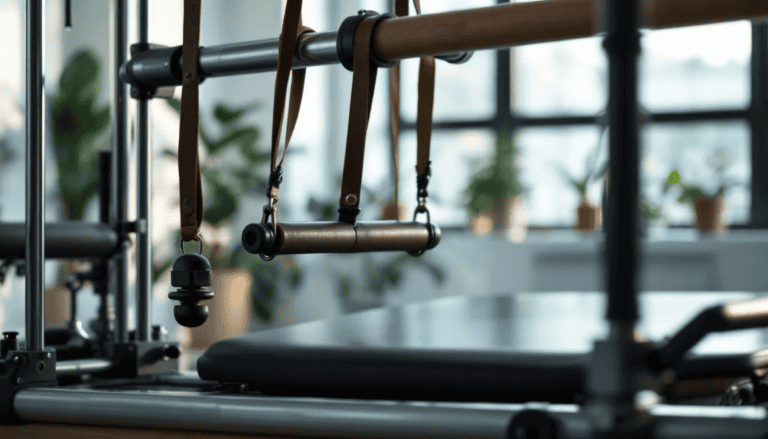
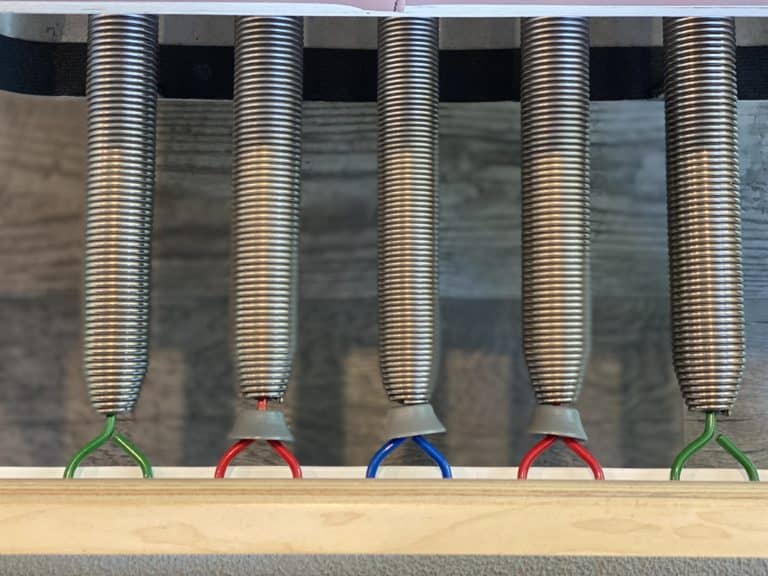
A reformer is a low frame with a padded platform — the carriage — that slides back and forth on rails. The carriage is connected to a bank of springs. You push off a footbar with your feet, or pull on straps with your hands, and the springs decide how hard the carriage fights you. They also decide how much it helps you, which is the part most people do not expect. One spring setting makes a movement harder; another supports you through a range of motion you could not control on your own yet.
It is a lot of hardware to take in on day one. A reformer looks a little like a medieval contraption until you have used one. Ten minutes in, it stops reading as a machine and starts reading as a very adjustable bench, and the frame will not ask anything of you that an instructor has not set up first.
What separates the work from most gym training is impact and tempo. Your spine stays supported, your knees and ankles are not absorbing landing forces, and the movements run slowly enough that you can feel which muscle is doing the job and which one is cheating. That combination is why desk-bound shoulders, runners, golfers and new parents all end up on the same piece of equipment. The studio’s page on the benefits of Pilates makes the longer case for the method itself.
Group class or private session?
Both exist, and they answer different questions. A group reformer class follows a planned sequence that the instructor adapts in the room as they watch people move. A private session is built around one person: a specific goal, a specific limitation, or simply a preference for learning the machine one-on-one before joining a class. The studio recommends a private session first for anyone new to the reformer, and it matters most if you are working around something significant in your body. The same teachers run both, and you can read about the instructors who teach here before you choose.
What happens in your first class, start to finish
You arrive, you tell the instructor your name and anything they should know about your body, and you take a reformer. Nobody is going to single you out, and nobody expects you to know what a footbar is. The instructor shows you how to set your own springs, where your feet go, and keeps an eye on you for the first few exercises.
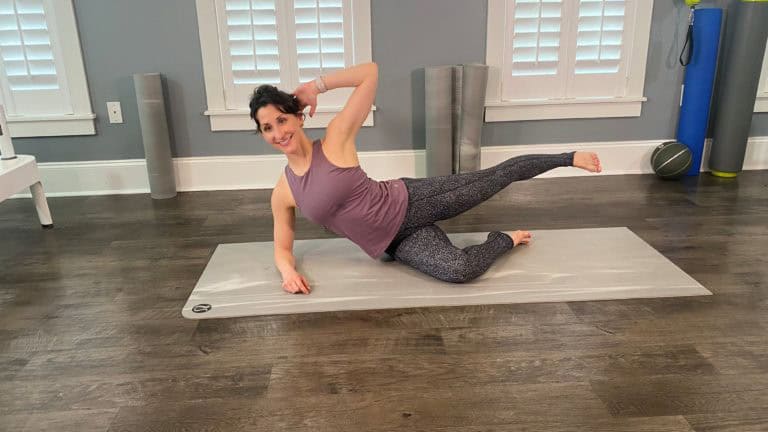
The class moves through the whole body rather than parking on one part of it: footwork on the bar, then arms through the straps, then abdominal work, then some mix of side-lying, kneeling and standing exercises. Spring tension changes between exercises and the instructor calls out the setting each time. If you miss a call, glance at the reformer next to you, or ask. Asking is normal and nobody minds.
Two things surprise most first-timers. The first is how small the work is — a few inches of range, held under control, finds muscles that heavy weights skip entirely. The second is where you feel it the next day, which is almost never where you expected. For the full arrival-to-exit walkthrough, the newbie guide to beginner Pilates in Mount Pleasant covers the visit step by step, and the class etiquette rundown answers the quieter questions about phones, talking and walking in late.
What a class costs, and how drop-ins and class packs work
Reformer classes cost more than a mat class or a standard gym visit, and the reason is physical rather than fashionable. A reformer is an expensive machine, it takes up real floor space, and a small class means fewer people covering the cost of the room and the instructor’s time. That is the trade: equipment and attention instead of volume.
At Pilates of Charleston there is no membership, no contract and no auto-renew: a drop-in class is $40, a pack of four is $150, and a pack of eight is $260. Rates are published on the site next to the eight-person class cap, so you can see the price and the class size together before you hand over a card. If you are comparing options, Pilates classes in Charleston by format and level lays out which format suits which goal.
When you compare studios on price, compare three things at once: the cap on class size, whether the pass expires, and whether leaving costs you anything. A cheaper class in a room of twenty-four is a different product, not a better deal on the same one.
A pass also changes how you treat the classes you have already bought. The people who get something lasting out of Pilates tend to be the ones who book the next class on the way out the door, while the people who leave it open-ended are usually the ones who try it twice and stop.
The cancellation policy, before you find out the hard way
The cancellation window here is firm, and it is applied the same way for a storm, for traffic backing up on the Ravenel, and for a change of plans. A studio with eight spots does not have the slack to hold one that goes unused. It is easier to know that going in than to learn it afterward, so check the window when you book your first class and set a reminder against it.
Eight reformers, eight people: what the cap actually changes
Eight is not a marketing number. It is how many reformers are in the room, which means the class cannot be oversold and the instructor can reach every machine in the time it takes to walk the length of the studio.
In a class of eight, several things become possible that are not possible at twenty-four. The instructor can check the springs you have set and correct them, rather than announcing settings to the room. A movement that does not agree with your shoulder gets swapped on the spot. Someone notices when your form drifts in the third set, which is the entire reason to pay for instruction instead of following a video at home.
It also changes the temperature of the room. Eight people see each other week after week, and the teachers learn names fast. The studio has been open in Mount Pleasant since 2011 under the same owner, and the owner has taught Pilates for more than 20 years and films for Dynamic Pilates TV, so the sequencing you get in class is not improvised on the morning. There is more on that history in the story behind Pilates of Charleston, and an eight-person reformer class described from the inside walks through how the 45-minute class feels when the room is full.
There is a trade-off, and it is worth naming: eight spots fill. Popular times go first, and a class you decide on at the last minute may not have a machine free. Booking a week ahead is the habit that makes a small studio work for you rather than against you.
What to wear and what to bring
Fitted clothing, or at least clothing that will not travel when you are on your back with your legs in the air. Leggings or shorts that stay put, and a top that stays down. Skip anything with hard zippers or buttons down the back, because you will spend part of the class lying on the carriage.
Most reformer studios ask for socks with grip on the sole rather than bare feet, for hygiene and for footing on the carriage and the footbar. Confirm what this studio asks for before your first visit — the studio’s FAQ page is the fastest place to check that, along with anything else you are meant to bring.
Beyond that: water, and a few spare minutes. Turning up early gives you room to meet the instructor, settle onto the machine and ask the question you had planned to ask. Second State coffee is next door if you end up with time to kill, which is a better problem than arriving flustered.
Reformer, mat, yoga and megaformer: how to tell them apart
These four get talked about as if they were interchangeable. They are not, and picking the wrong one is the most common way a first class disappoints someone.
Mat Pilates is the same method without the machine: body weight, a mat, sometimes a small prop like a ring or a ball. It is harder than it sounds, precisely because nothing is assisting you.
Reformer Pilates adds the carriage and springs, so resistance can be dialed up for strength or down for support. That is why one class can hold a conditioned athlete and someone coming back after years away, working at genuinely different loads on identical machines.
Yoga shares the floor space and the attention to breath, but it is chasing a different outcome — mobility, balance, and holding shapes — where Pilates chases controlled strength through the middle of the body. The honest comparison most people want is whether Pilates or yoga does more for toning.
A megaformer is a different machine built for a different class: higher intensity, longer time under tension, closer in spirit to a boot camp. Searching for one and booking the other is a frequent mix-up around Charleston, and the reformer and megaformer comparison sorts out which machine you are actually looking for.
Pregnancy, postpartum and injuries: say something first
Tell your instructor before class rather than during it. That goes for a disc issue, a shoulder you are rehabbing, a replaced knee, a recent surgery, and for pregnancy at any stage. An instructor can change an exercise, change a spring, or give you a different version of the same work — but only if they know before the class starts.
If you are managing something significant, start with a private session rather than a group class. Group class is not automatically appropriate for every body on every day, and a studio that tells you otherwise is selling instead of teaching. A private lets an instructor watch how you move, build the modifications you need, and send you into a class knowing exactly what to do when an exercise does not suit you.
Pregnancy and the postpartum months have their own considerations, and those change by trimester. Clear it with your doctor or midwife first — nothing on this page is medical advice. Prenatal and postnatal reformer sessions by trimester covers what a session looks like at each stage.
How often to come, and when you notice something
Once a week keeps you familiar with the machine. Twice a week is where most people say the work starts to show up outside the studio — standing in line, lifting a toddler, walking King Street without their lower back complaining. There is no fixed timetable for that, and anyone who gives you one is guessing.
What tends to arrive first is not a visible change but a positional one: you notice where your ribs are, you stop gripping your neck to do a sit-up, you come off a long drive without stiffening. Strength and shape follow that, slowly, in the order your body decides.
A reasonable first commitment is eight to ten classes close enough together that you are not relearning the machine each time. Buy a class pack that covers that, go twice a week if your schedule allows, and judge the method after you have stopped thinking about the equipment.
Where the studio is, and who travels to it
Pilates of Charleston is at 778 S. Shelmore Blvd in Mount Pleasant, next to Langdon’s and Wood & Grain, with Second State coffee next door. Clients come from Mount Pleasant, Daniel Island, Isle of Palms, Sullivan’s Island and downtown Charleston, which is a reasonable map of who can get there and back inside a lunch break. The full list of areas the studio serves is on the site, and the studio’s location details will get you to the right door.
The recognition is local too. Readers of the Charleston City Paper voted Pilates of Charleston the Best Pilates Studio in 2023 and in 2024, and the studio is nominated again for 2026. Its Google Business Profile carries 46 five-star reviews. If you want to see what that award run looks like, there is the studio’s Best Pilates Studio recognition.
Booking your first reformer class
Start with a private session, buy a drop-in or a class pack for the classes that follow, and say it is your first time. That is the whole process, and it is deliberately short.
If you would rather ask something before you commit — about a knee, a schedule, a private session, or which class a beginner should take — reach the studio directly and ask. Groups get their own track: a Charleston bachelorette party on the reformers is a published service line here, and it books differently from a regular class.
The one thing worth saying plainly, because it is what keeps most people from booking at all: the room is built to be inviting rather than intimidating. Every regular in the room walked in once without knowing what a footbar was. Book the class, tell the instructor it is your first, and let the springs do the explaining.
Frequently asked questions
What is the average price of a reformer Pilates class?
It varies widely by city, by class size, and by whether you buy single classes or a pass. Group reformer generally costs more than mat Pilates or a gym drop-in because the equipment is expensive and the classes are small. Compare the cap on class size and whether a pass expires, not just the headline number. At Pilates of Charleston, a drop-in class is $40, a pack of four is $150, and a pack of eight is $260, with no membership or contract, and the rates are published alongside the eight-person class cap.
Can I lose belly fat with reformer Pilates?
Not in a targeted way. No exercise burns fat from one chosen area of the body, and reformer Pilates is no exception. What it does well is build strength and control through the abdominals, back and hips, which changes posture and how the midsection carries itself. Fat loss itself tracks with overall activity and eating habits, and that part is worth discussing with your doctor or a dietitian.
Is reformer Pilates harder than mat Pilates?
Harder is the wrong axis. The springs on a reformer can add resistance that mat work cannot, and they can also assist a movement you could not hold on the mat unaided. A reformer class is usually more approachable for a beginner for that reason, and it can be far more demanding for someone already conditioned. The machine widens the range at both ends.
How long does it take to see results from reformer Pilates?
There is no honest fixed timeline, and the first changes are rarely the ones you can photograph. Most people report noticing posture, balance and everyday ease before anything visible, and that usually takes consistent weeks rather than a few classes. Going twice a week for a couple of months gives the method a fair test. Tell your instructor what you are hoping for so they can track it with you.
Do I need to be fit or flexible before my first reformer class?
No. Flexibility is an outcome of the work, not a prerequisite for it, and the springs mean a movement can be scaled to whatever you can control today. Tell the instructor it is your first class and mention anything in your body that needs working around. In a class capped at eight people, there is time for them to set you up properly.