Why “Pilates Arms” Are Trending — and How to Get Them
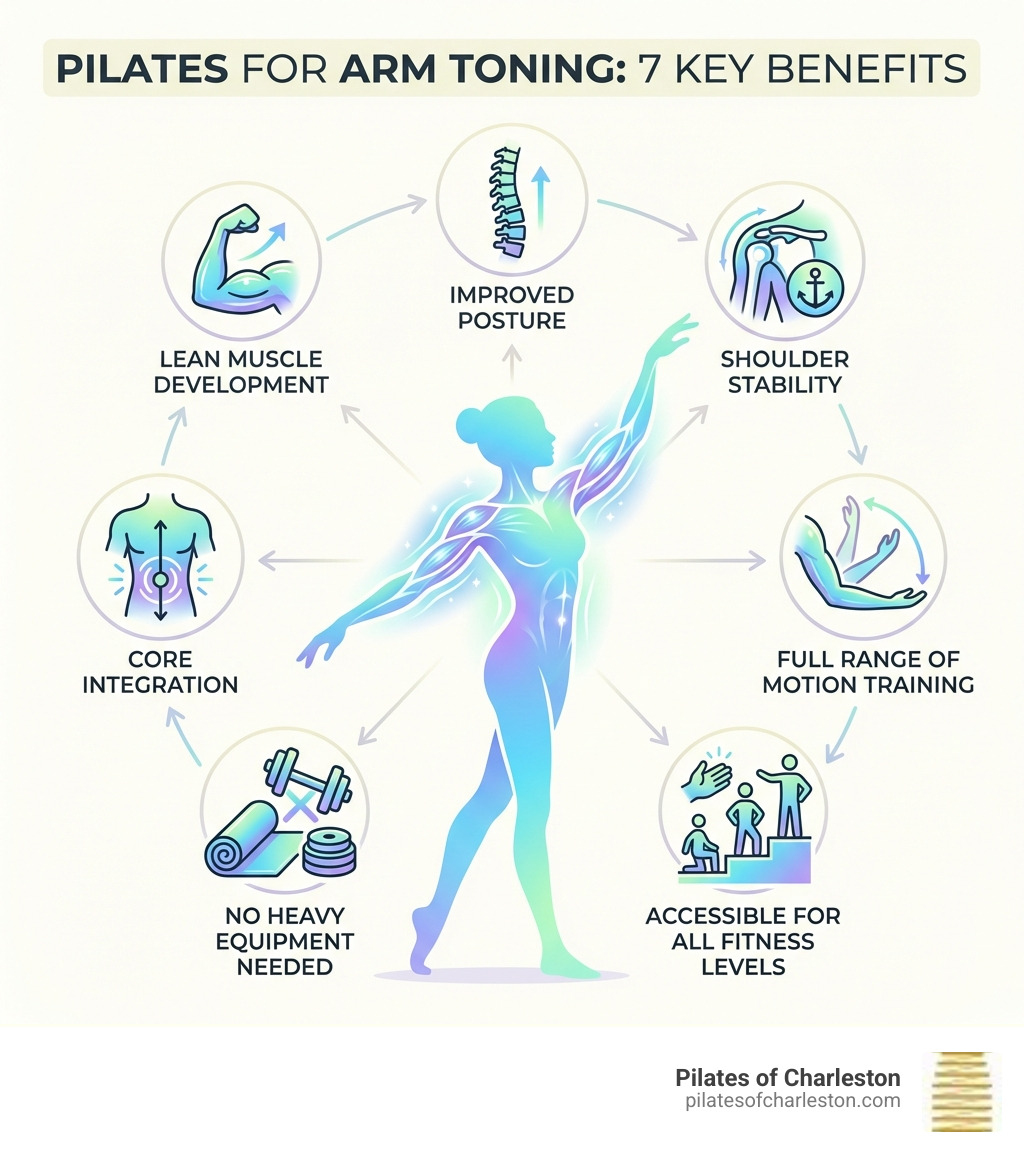
Pilates for arm toning is one of the most effective ways to sculpt lean, defined arms without heavy weights or bulky gym equipment. Here’s a quick look at what it delivers:
- Toned shoulders and triceps through controlled, resistance-based movement
- Improved posture by strengthening the upper back and shoulder stabilizers
- Full-body engagement — even “arm” exercises activate your core and legs
- Accessible for all fitness levels — mat-based or with light props like resistance bands or a Pilates ring
- No gym required — a mat and your own bodyweight are enough to start
You may have noticed the phrase “Pilates arms” blowing up on social media after Miley Cyrus took the 2024 Grammy stage with visibly sculpted shoulders and biceps. Pilates was quickly credited — and for good reason. Pilates is a resistance-based method that moves your arms through multiple planes of motion: flexion, extension, rotation, and side bending. That variety is exactly what builds the kind of long, defined muscle tone that turns heads.
But here’s the honest truth: results vary. Body type, age, diet, and how consistently you train all play a role. What Pilates does guarantee is stronger, more functional arms — and that’s a win worth showing up for.
Why Pilates for Arm Toning is So Effective
When most people think of “toning up,” they imagine lifting heavy dumbbells until their muscles give out. While traditional weightlifting has its place, pilates for arm toning offers a unique physiological advantage. Instead of just shortening the muscle during a contraction (concentric), Pilates emphasizes “eccentric” contractions—where the muscle is under tension while it is lengthening. This is the secret sauce behind that “long and lean” look everyone is after.
Research supports these visible changes. According to a systematic review in the Journal of Sports Medicine and Physical Fitness, the Pilates method significantly improves physical conditioning and upper body strength in healthy subjects. By focusing on muscle endurance rather than just raw power, we create arms that aren’t just for show—they are functionally strong for everyday life.
Furthermore, Pilates addresses the “scapular stability” that many gym routines miss. If your shoulders are rounded forward from staring at a computer, your arm muscles won’t pop the way they should. Pilates pulls the shoulders back and down, opening the chest and allowing the triceps and deltoids to be seen in their best light.
| Feature | Pilates Arm Training | Traditional Weight Training |
|---|---|---|
| Primary Goal | Lean muscle, flexibility, & posture | Muscle mass & maximum strength |
| Contraction Type | Emphasis on eccentric (lengthening) | Emphasis on concentric (shortening) |
| Equipment | Bodyweight, springs, light props | Heavy dumbbells, barbells, machines |
| Muscle Focus | Small stabilizer muscles & large groups | Isolated large muscle groups |
| Impact | Low-impact, joint-friendly | Can be high-impact on joints |
The Science of Lean Muscle Development
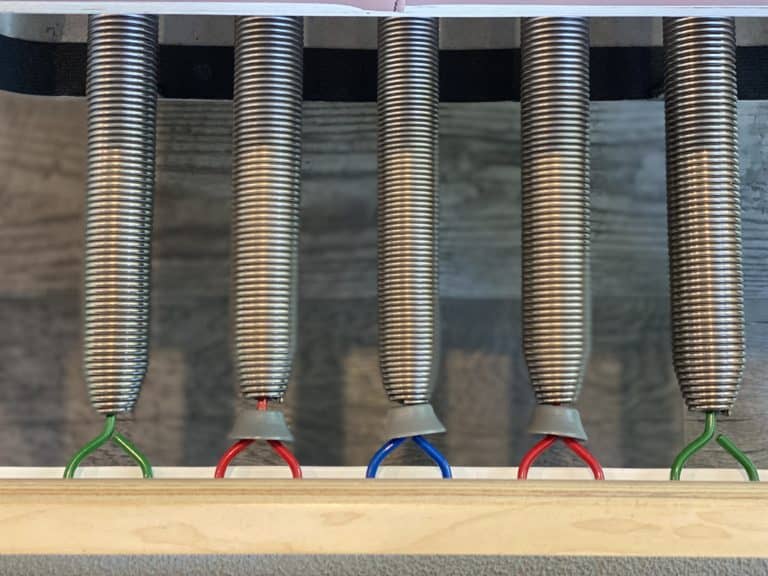
As Laura Hagan, PhD, DPT, points out, everyone responds to exercise differently. However, the science of resistance remains constant. By using your own arm’s weight—which, as instructor Jeanne Lee notes, is “heavier than you think”—or the light resistance of Reformer springs, you challenge the muscle fibers without causing the micro-tears that lead to significant bulk.
A study on muscle strength in older women published in The Journal of Strength and Conditioning Research found that a 12-week Pilates program significantly improved muscle strength and physical performance. This proves that no matter your age, your muscles can adapt and firm up when exposed to the consistent, precise tension provided by Pilates.
Beyond the Biceps: Full Body Integration
One of our favorite things about pilates for arm toning is that it’s never just about the arms. In the Pilates world, your arms are connected to your “powerhouse” (your core). When you perform an arm movement, your abdominals must fire to keep your torso still.
This full-body integration means you’re burning more energy and improving your back strength and shoulder stability simultaneously. For those looking to dive deeper into how this works, you can explore our services and rates to see how we incorporate these principles into every session.
7 Best Exercises Using Pilates for Arm Toning
Whether you are on a mat at home or using our Balanced Body Allegro 2 Reformers in the studio, these moves are the gold standard for sculpting the upper body.
- The Hundred: While known as a core move, the vigorous pumping of the arms 6 to 8 inches off the floor engages the triceps and shoulders. Think of moving from the armpit, not just the wrist!
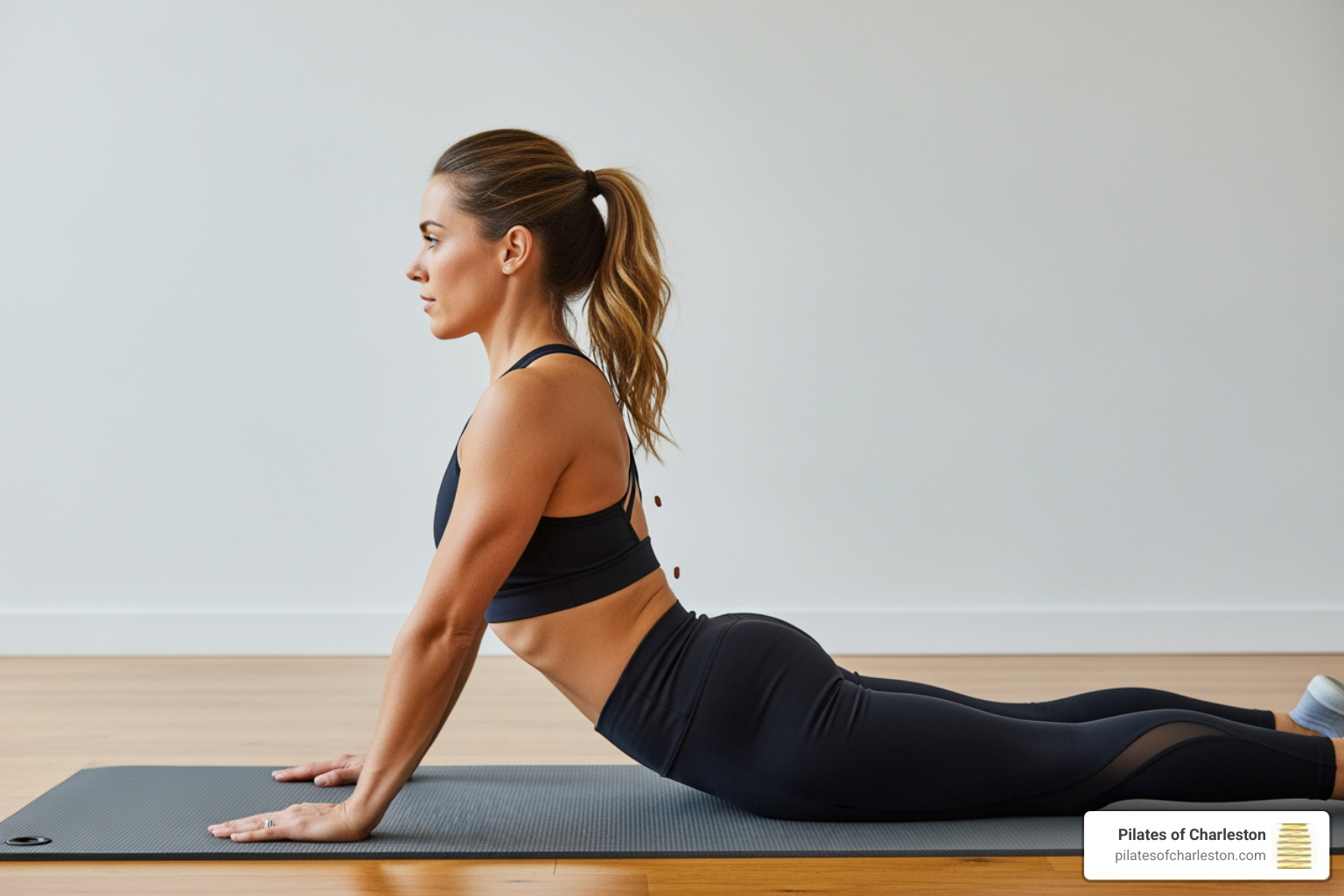
- Swan: This exercise targets the “bra-line” area and the backs of the arms. As you press your hands into the mat to lift your chest, your triceps do the heavy lifting.
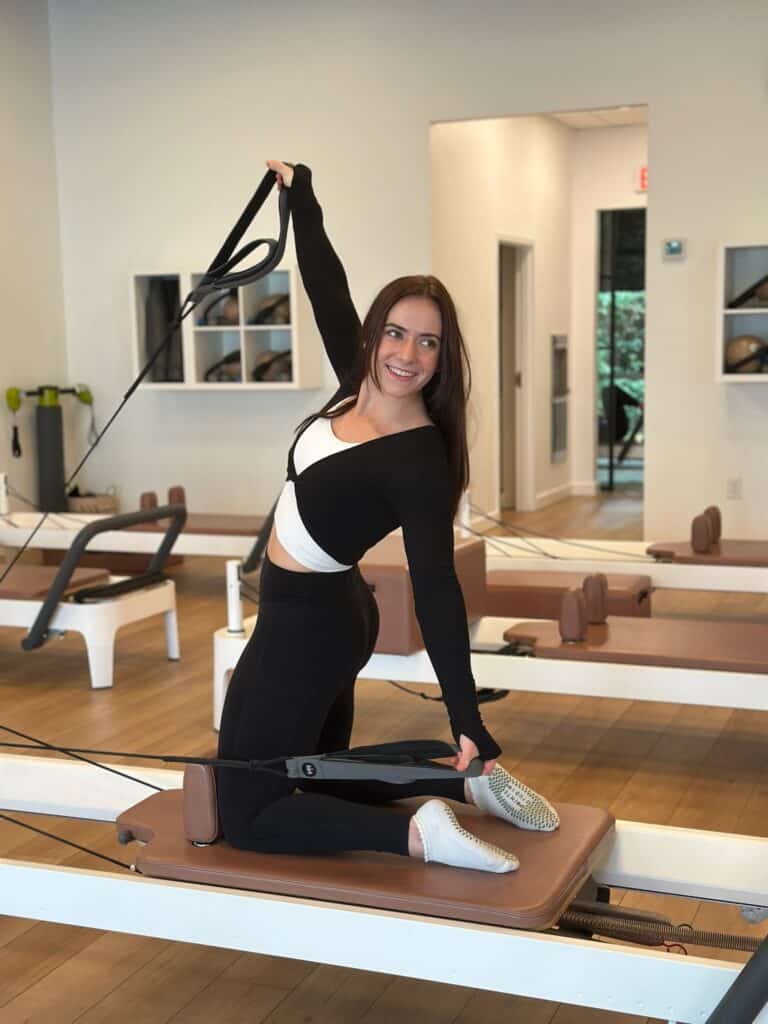
- Side Bend: A phenomenal way to use your body weight. Supporting your weight on one arm while reaching the other overhead tones the shoulders and the obliques.
- Shave the Head: Imagine you are holding a zipper behind your head. You extend your arms up in a diamond shape, directly targeting the backs of the arms (triceps).
- Serve the Platter: Reach your arms forward as if offering a tray. This works the front of the shoulders and the biceps while requiring intense core stability.
- Hug the Tree: With arms wide in a circle, imagine you are hugging a massive Sequoia. This sculpts the chest and the front of the shoulders.
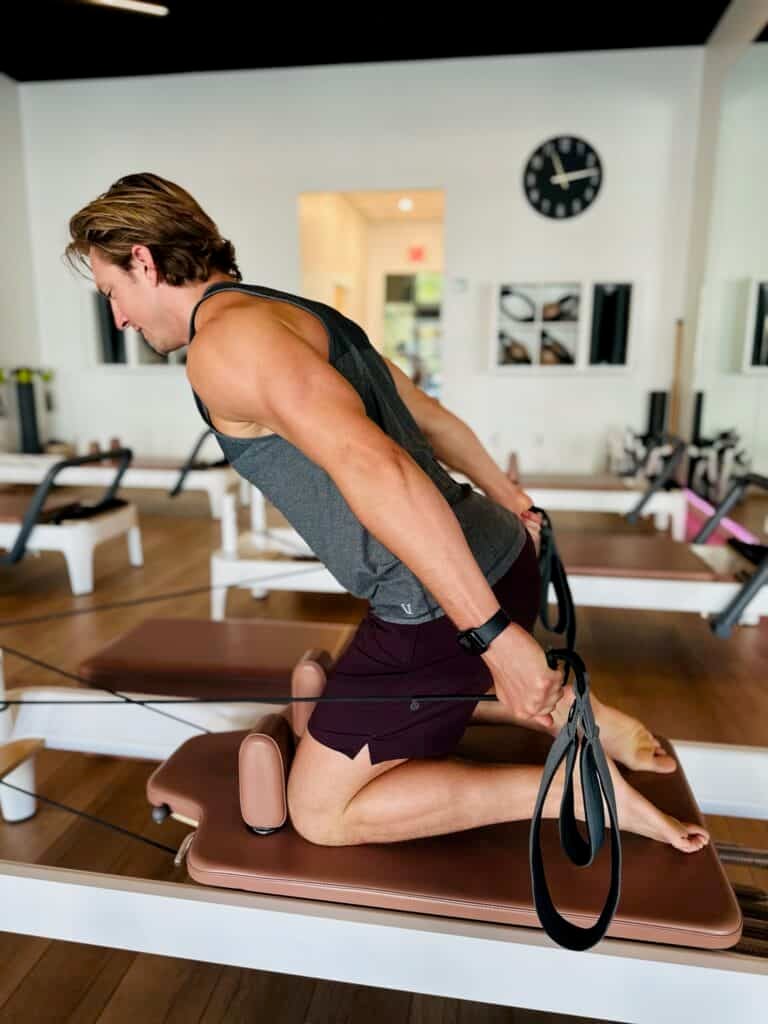
- Boxing: Leaning forward with a flat back, you “punch” one arm forward and one back. This is a tricep-toning powerhouse.
If you want a personalized breakdown of these moves to ensure your form is perfect, we highly recommend checking out our private sessions.
Beginner-Friendly Pilates for Arm Toning Moves
If you’re just starting, don’t feel pressured to use heavy resistance. Simple arm circles can be incredibly humbling. Stand tall, extend your arms to the sides, and draw tiny, dinner-plate-sized circles. After 30 seconds, your shoulders will be singing!
You can also perform bicep curls using just your body weight by creating your own resistance—imagine you are pulling your hand through thick molasses. If you want a little extra “oomph” at home, grab two soup cans or water bottles. Consistency is the most important factor; doing these small moves 3–5 times a week will yield better results than one marathon session a month.
Advanced Pilates for Arm Toning with Props
Once you’ve mastered the basics, it’s time to add props.
- Resistance Bands: These provide “linear variable resistance,” meaning the further you stretch them, the harder they get.
- The Magic Circle (Pilates Ring): Squeezing this ring between your palms during a chest press will fire up your pectorals and inner arms instantly.
- Dumbbells (1-3 lbs): In Pilates, we rarely go over 3 pounds. Why? Because we want to maintain the precision of the movement without letting the larger, “bulky” muscles take over.
Maximizing Your Results: Frequency and Form
To see the best results from pilates for arm toning, you need to focus on the “how” just as much as the “how often.” An 8-week study on reformer programs showed that sedentary women who practiced three times a week saw significant improvements in health markers and flexibility. We generally recommend 3 sessions per week as the “sweet spot” for visible muscle definition.
However, your body type and diet also play roles. You can have the strongest triceps in the world, but they won’t be visible if they are hidden under a layer of inflammation or excess body fat. A balanced diet and adequate recovery are essential components of the “Pilates body” equation.
Avoiding Common Form Mistakes
Even the best exercises won’t work if your form is off. Here are the “big four” mistakes we see:
- Locked Elbows: Always keep a “micro-bend” in your joints to keep the tension in the muscles, not the ligaments.
- Shrugging Shoulders: If your shoulders are touching your ears, your neck is doing the work, not your arms. Drop those blades!
- Arched Back: If you arch your back during overhead presses, you’ve lost your core engagement. Tuck your ribs in.
- Wrist Alignment: Keep your wrists “long” and neutral. Breaking at the wrist can lead to strain and reduces the work in the forearms.
How to Modify for Different Fitness Levels
If a full Side Bend is too much, drop to a kneeling position. If standing bicep curls make your lower back ache, try them seated on a chair or a Pilates ball. The beauty of Pilates is that we can reduce the range of motion or change the orientation to gravity to make any move accessible. As you get stronger, we progress you by adding reps or increasing the spring tension on the Reformer.
Frequently Asked Questions about Pilates Arms
How long does it take to see visible results?
While you’ll feel better after the first session, visible muscle definition usually takes about 12 weeks of consistent practice. Joseph Pilates said, “In 10 sessions you’ll feel the difference, in 20 sessions you’ll see the difference, and in 30 sessions you’ll have a whole new body.”
Can Pilates alone create “Pilates arms”?
Pilates is a massive piece of the puzzle, but it works best when combined with a healthy lifestyle. Factors like age and genetics influence how quickly muscle definition appears. Adding a bit of cardiovascular exercise (like a brisk walk) can help reveal the lean muscle you’re building on the mat.
Is equipment necessary for arm sculpting?
Absolutely not! Mat Pilates uses gravity and the weight of your own limbs to create resistance. However, equipment like the Balanced Body Allegro 2 Reformer allows us to use springs, which can provide a more targeted and intense workout for those looking to level up quickly.
Conclusion
At Pilates of Charleston, we believe that everyone deserves to feel strong and confident in their own skin. Whether you’re looking for that “Miley Cyrus” look or simply want the functional strength to lift your groceries (or luggage!) with ease, pilates for arm toning is the answer. Our premier boutique studio in Mount Pleasant, SC, offers a welcoming environment where our expert instructors guide you through every pulse and press.
Ready to start your transformation? Join our community and see why we were voted the best by our clients in 2023 and 2024. Schedule a group class today and let’s get those arms moving!