Why a Pilates Reformer Ab Workout Delivers Real Core Results
A pilates reformer ab workout targets your deep core muscles using spring resistance and a sliding carriage — giving you far more than crunches ever could. Here are the key exercises to know:
- The Hundred – Curl up, extend legs to 45°, pulse arms with rhythmic breathing for 100 reps
- Kneeling Abdominals – Hands and knees, drag carriage with abs (no arms!)
- Pikes – Forearm plank on short box, lift hips using core strength
- Teaser – Curl into V-sit on long box using strap assistance
- Reverse Crunches – Feet in straps, pull knees to nose; add twists for obliques
- Plank to Pike – Drive the pike with your core, not momentum
- Elephant – Feet on shoulder blocks, open and close carriage with deep core engagement
You already know you need a stronger core. But endless crunches and mat exercises can plateau fast — especially for women juggling packed schedules who want real, visible results.
The reformer changes that equation entirely.
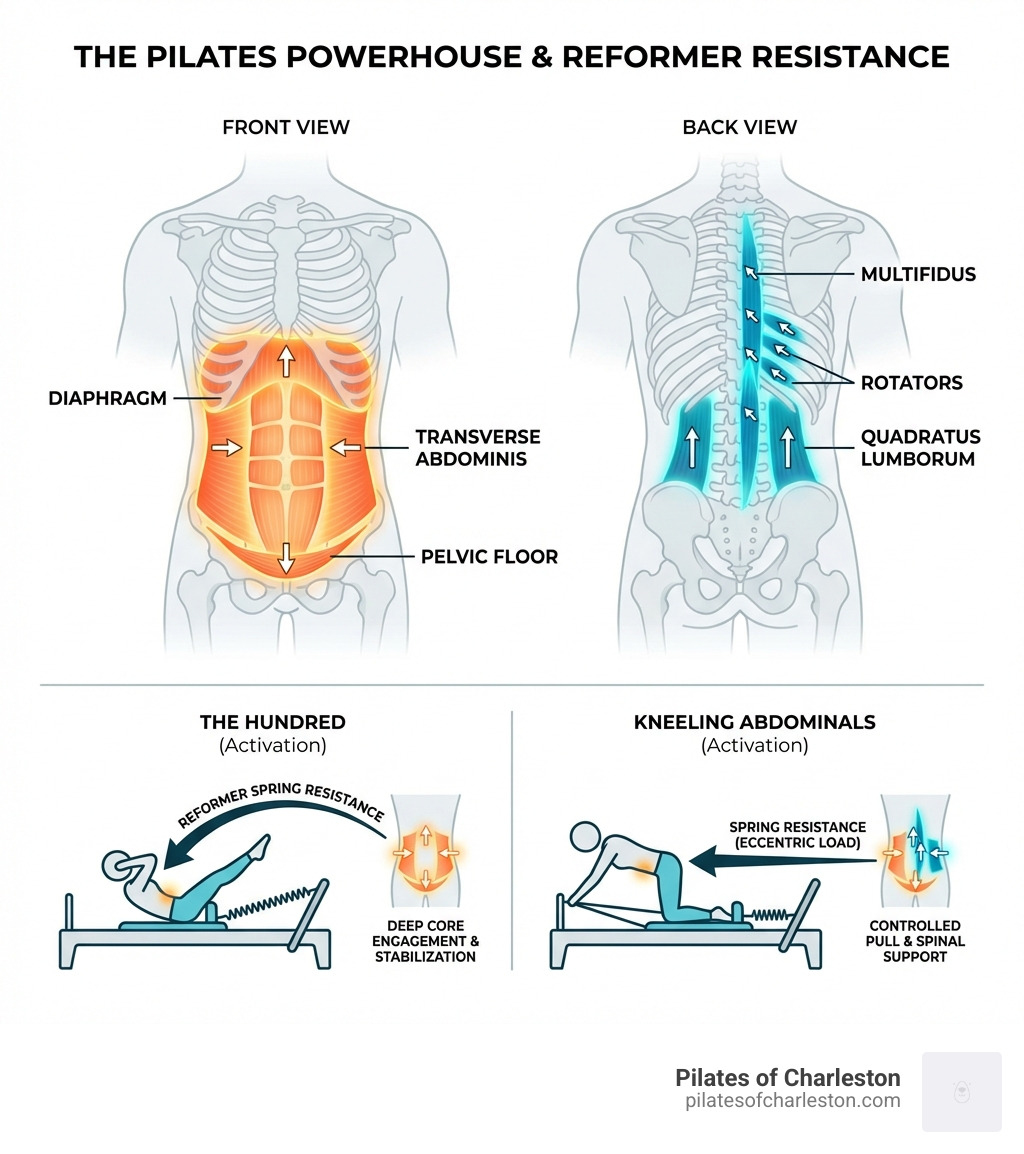
Unlike a mat, the reformer adds spring resistance that increases as you move. That means your core has to work harder through the full range of motion. It doesn’t just hit your six-pack. It fires up your deep stabilizers — the transverse abdominis, pelvic floor, multifidus, and more — the muscles that actually fix posture and protect your lower back.
A 2023 study published in Behavioral Sciences found that core training significantly improves balance and core endurance in athletes. And Pilates is uniquely designed to activate these powerhouse muscles in every single movement, not just dedicated ab exercises.
The result? A smarter, more efficient workout — even on your busiest days.
The Science of Resistance: Why Reformer Training Beats Crunches
When we talk about the “Pilates Powerhouse,” we aren’t just talking about a six-pack. We are talking about the deep-seated muscles that act as a corset for your spine. Traditional crunches often over-rely on the rectus abdominis (the outermost “abs”) and the hip flexors, frequently leading to neck strain and a lack of deep-tissue engagement.
A pilates reformer ab workout utilizes eccentric loading. This means your muscles are lengthening under tension as you control the carriage’s return. This type of training is incredibly effective for building lean, functional strength without the bulk. Furthermore, the reformer provides a unique environment for spinal decompression. Because many exercises are performed lying down (supine) or with supported weight, you can strengthen your midsection while actually providing relief from lower back pain.
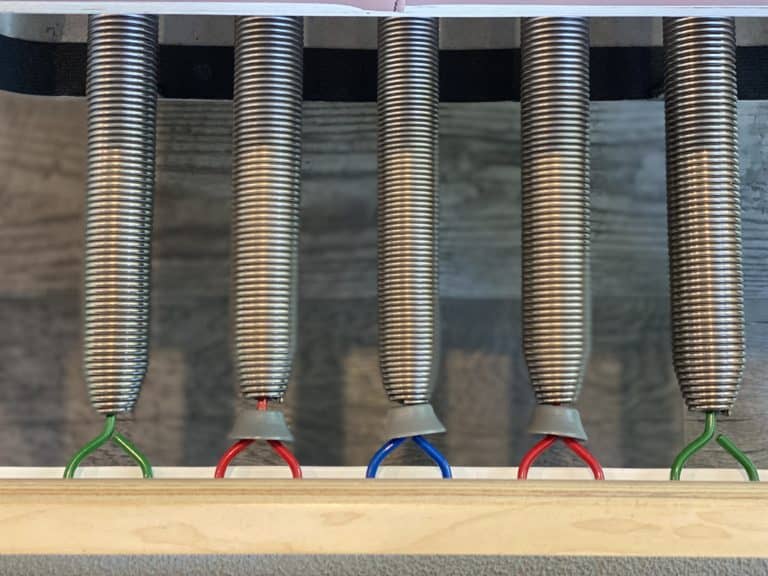
The secret lies in the springs. Unlike cable machines at a traditional gym where resistance can fade at the end of a movement, reformer resistance actually increases the further you push or pull. This forces your transverse abdominis and pelvic floor to stay “on” throughout the entire repetition.
| Feature | Mat Pilates | Reformer Pilates |
|---|---|---|
| Resistance Source | Gravity & Bodyweight | Variable Spring Tension |
| Core Focus | Stability against gravity | Stability against moving carriage |
| Muscle Lengthening | Moderate | High (Eccentric Loading) |
| Spinal Support | Floor provides base | Carriage & Straps provide feedback |
| Variety | Limited by props | Infinite via straps, bars, and boxes |
7 Must-Try Exercises for Your Pilates Reformer Ab Workout
Ready to feel the “Pilates shake”? These seven exercises form the backbone of a high-intensity core routine. At Pilates of Charleston, we utilize these moves on our Balanced Body Allegro 2 Reformers to ensure you get the most out of every second spent in the studio.

1. Kneeling Abdominals
If you want one exercise that you will “really feel” immediately, this is it. Start on your hands and knees with your knees against the shoulder pads. Exhale and use your deep lower abs to drag the carriage toward your hands. The trick here is to avoid using your arms to move the carriage—your abs should do 100% of the work.
2. Reverse Crunches
Lying on your back, place your feet in the long straps (or around your thighs for a modification). Pull your knees toward your nose, lifting your hips slightly off the carriage. This targets the lower abdominals and can be evolved into “oblique twists” by pulling the knees toward opposite shoulders.
3. Pikes
This is a gymnast-style move that makes you feel like a pro. Start in a forearm plank with your feet on the carriage and elbows on the short box (or hands on the footbar). Using your core, lift your hips toward the ceiling, drawing the carriage in. It requires immense stability and control.
4. Teaser
The Teaser is infamous for its difficulty on the mat, but the reformer actually makes it more accessible (and effective) by using strap assistance. Lying on a long box, you’ll curl into a V-sit while reaching for the straps, helping you find that perfect balance point between your sit-bones and tailbone.
5. Leg Circles
While often thought of as a hip exercise, Leg Circles with feet in straps require your core to stay perfectly still while your legs move in a 360-degree motion. It’s all about resisting the “wobble” of the carriage. Keep the range small and slow to really feel the abs switch on.
6. Plank to Pike (Upstretch)
Start with your heels halfway up the shoulder blocks and hands on the footbar. Inhale to open the carriage into a full plank, then exhale to lift the hips and close the carriage. Focus on driving the movement from your midsection rather than your shoulders.
7. Elephant
This classic move focuses on the connection between your feet and your core. With your feet flat against the shoulder blocks and hands on the footbar, use your lower abs to pull the carriage in and out just a few inches. It’s a small movement with a massive burn.
If you’re looking to master these moves under expert guidance, more info about our group classes is available on our schedule page.
The Hundred: The Essential Pilates Reformer Ab Workout Starter
Joseph Pilates originally designed The Hundred as a way to “pump” blood through the body and warm up the lungs. On the reformer, this exercise works the upper and lower abs, lats, triceps, and even the inner thighs.
To perform it:
- Lie on the carriage with your head in the headrest and hands in the straps.
- Lift your head and shoulders into a crunch while extending your legs to a 45-degree angle.
- Pump your arms vigorously (about 6 inches up and down).
- Breathe in for 5 counts and out for 5 counts.
- Repeat until you hit 100 pumps.
Pro tip: If your neck feels strained, keep your head down or bring your legs to a tabletop position. And don’t forget to smile—it actually helps engage the facial muscles and keeps the mood light during those last 20 reps!
Customizing Your Pilates Reformer Ab Workout for All Levels
One of the best things about the reformer is its versatility. Whether you are a total beginner or an advanced athlete, the machine can be adjusted to meet you where you are.
For Beginners:
- Strap Assistance: Use the straps to help you find your balance in moves like the Teaser.
- Heavier Springs: Surprisingly, a heavier spring (like one blue or one red) can sometimes make ab work easier by providing more “feedback” and support for the carriage.
- Reduced Range of Motion: Don’t feel like you have to move the carriage the full length. Small, controlled pulses are often more effective for building initial strength.
For Advanced Users:
- Light Resistance: Switching to a very light spring (a yellow or a half-spring) during Pikes or Plank work makes the carriage incredibly “unstable,” forcing your core to work overtime to keep it still.
- Increased Duration: Aim for 45 to 60 seconds per move, or try to complete a full circuit without resting between exercises.
- Added Props: Incorporating a small fit ball behind the thoracic spine or using the jumpboard for cardio intervals can take your pilates reformer ab workout to the next level.
Pro Tips for Form and Back Pain Relief
The most common mistake people make during a pilates reformer ab workout is losing their “neutral spine.” If your lower back is arching off the carriage, your hip flexors are likely taking over, which can lead to back pain rather than relief.
- Rib Cage Placement: Keep your bottom ribs “knitted” together and heavy on the carriage. This ensures you are using your abdominals rather than your back muscles.
- Neck Strain: If you feel your neck working more than your abs, it’s a sign that your core isn’t yet strong enough to support the weight of your head. Keep your head down or use a small ball for support until your strength improves.
- Breathing Patterns: In Pilates, the exhale is your power. Always exhale on the “effort” part of the move (e.g., when pulling the knees in during Kneeling Abdominals). This helps you engage the transverse abdominis more deeply.
If you have specific injuries or want a routine tailored to your body, you can schedule a private session with one of our certified instructors.
How to Structure Your Pilates Reformer Ab Workout for Success
Consistency is the key to seeing those “hard core” results. We recommend performing a dedicated ab-focused routine 2 to 3 times per week. This allows for the 48-hour recovery window your muscles need to repair and grow stronger.
A great way to structure your session is through circuit training. For example:
- Warm-up: The Hundred (100 reps)
- Circuit (Repeat 3 times):
- Kneeling Abdominals (15 reps)
- Reverse Crunches (15 reps)
- Plank to Pike (10 reps)
- Leg Circles (10 each way)
- Finisher: 1-minute Plank hold on the reformer
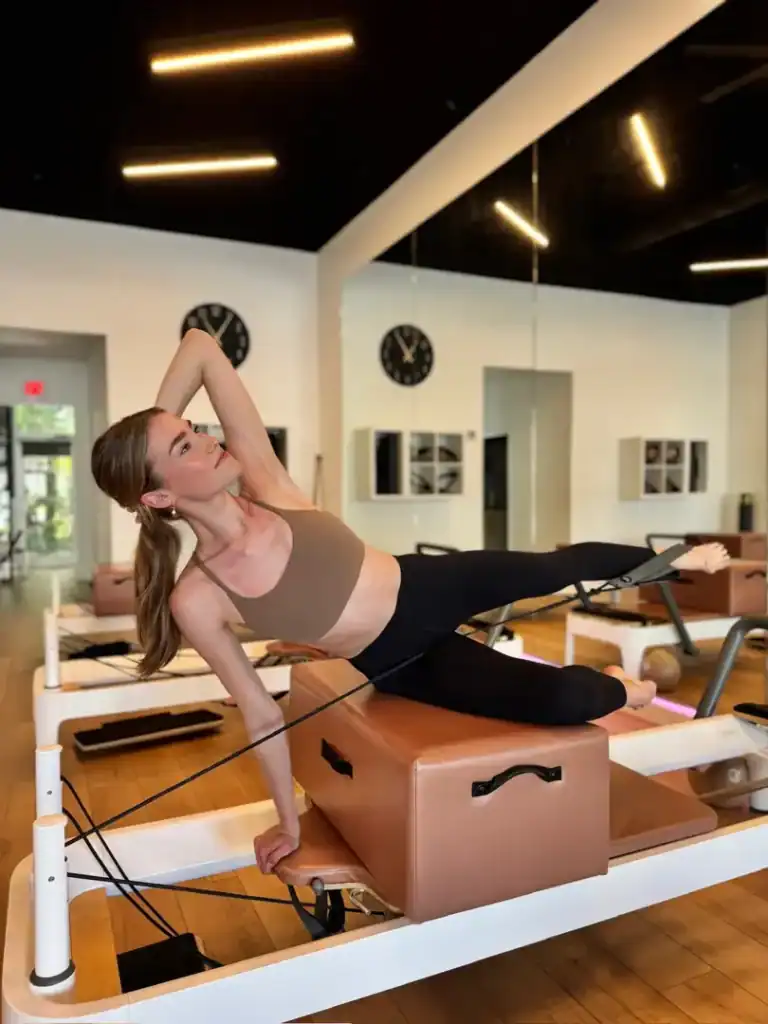
To keep things interesting, you can incorporate accessories like the jumpboard for a cardio blast. Jumping on the reformer requires a massive amount of core stabilization to land softly and control the carriage. You can also use the short box for a dedicated “Side to Side” or “Tree” series to target the obliques and improve spinal flexibility.
For a full breakdown of what we offer, check our services and rates to find the package that fits your lifestyle.
Frequently Asked Questions about Pilates Reformer Ab Workouts
How often should I do a reformer ab workout?
For the best results, aim for 2 to 3 sessions per week. Because Pilates focuses on deep, stabilizing muscles rather than just surface-level “mirror muscles,” you need to give your body time to recover. Cross-training with mat Pilates or light cardio on off-days is a great way to maintain momentum without overtraining.
What is the best spring setting for abs?
It depends on the exercise! For stability-based moves like Planks or Pikes, a lighter spring (like one blue) is often harder because the carriage moves more easily. For “pulling” moves like Kneeling Abdominals, a medium to heavy spring provides the resistance needed to fire up the muscles. Always listen to your instructor’s cues regarding “blue” or “red” spring settings.
Can beginners do reformer ab exercises safely?
Absolutely. The reformer is actually one of the safest ways for beginners to build core strength because the machine provides so much feedback. At Pilates of Charleston, our instructors are experts at providing modifications—such as keeping your feet on the floor or using the safety bars—to ensure you are moving with integrity and safety.
Conclusion
A pilates reformer ab workout is about more than just aesthetics; it’s about building a body that is strong, resilient, and pain-free. By moving away from the “crunch” mentality and embracing the resistance of the reformer, you target the deep powerhouse muscles that truly transform your posture and athletic performance.
At Pilates of Charleston, we pride ourselves on being the premier boutique studio in Mount Pleasant, SC. Voted “Best Pilates Studio” by our clients in 2023 and 2024, we use top-of-the-line Balanced Body Allegro 2 Reformers to provide an unmatched workout experience. Whether you’re a seasoned pro or just starting your fitness journey, our expert instructors are here to help you reach your goals.
Ready to see what your core is truly capable of? Start your journey at Pilates of Charleston today and experience the difference of a dedicated reformer practice.