Why Pilates and Strength Training Work Better Together
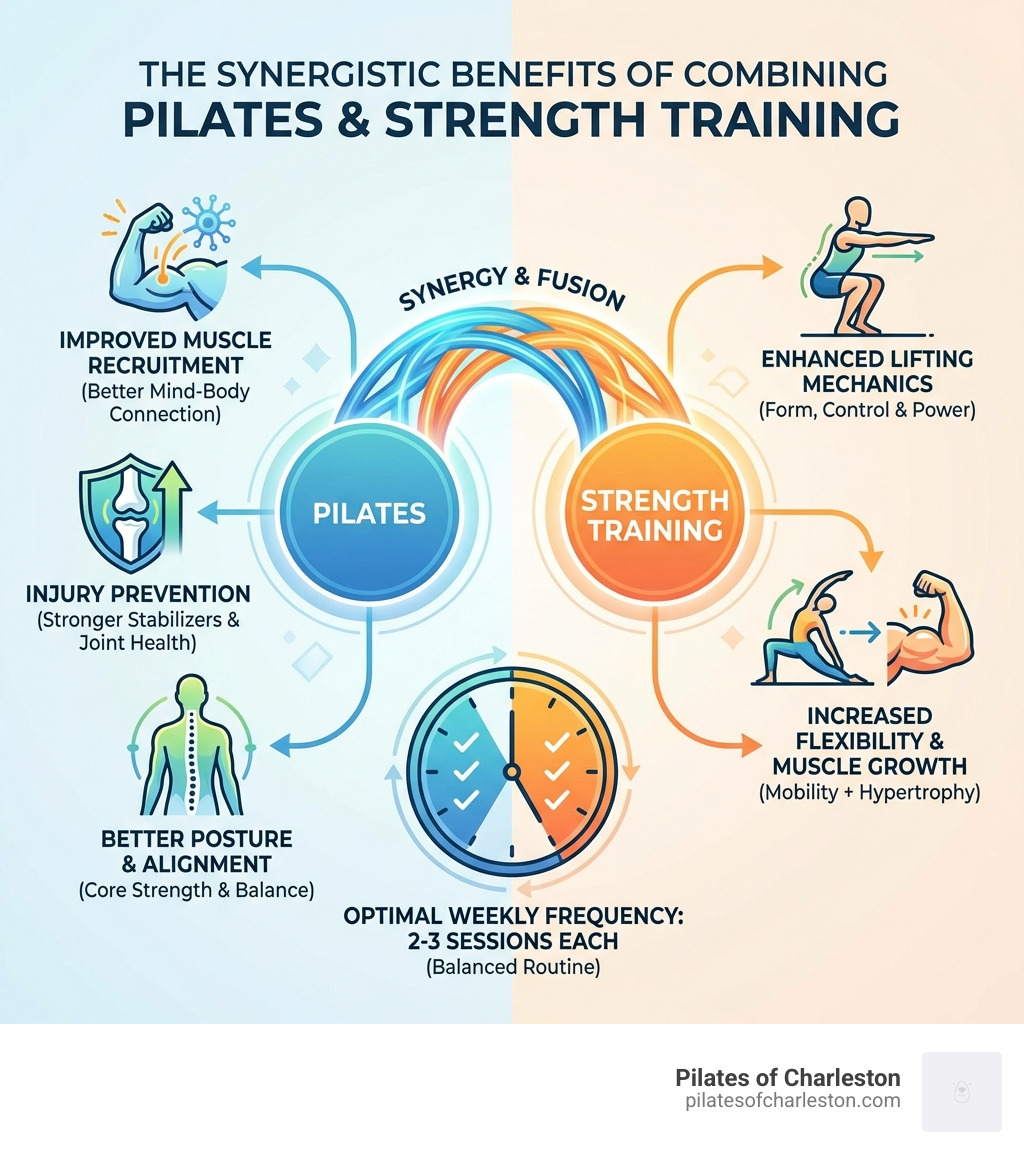
Pilates and strength training aren’t competing fitness methods—they’re complementary partners that amplify each other’s benefits. When you combine them, you build a stronger, more balanced body that moves better and stays injury-free.
Quick Answer: How to Integrate Pilates and Strength Training
- Do both 2-3 times per week: Aim for 2-3 strength sessions and 2-3 Pilates sessions weekly
- Use Pilates as your warmup: Start with 10 minutes of Pilates activation before lifting weights
- Alternate on different days: Schedule Pilates on non-lifting days for active recovery
- Focus on different goals: Strength training builds muscle mass, while Pilates improves stability and control
- Combine in hybrid sessions: Blend Pilates principles (breath, alignment, core activation) directly into your strength exercises
Here’s the reality: focusing on just one leaves gaps. Weight training without mobility work creates stiffness and increases injury risk. Pilates alone doesn’t provide enough progressive overload to build significant muscle mass or combat age-related muscle loss (sarcopenia), which starts in your 30s at a rate of 3-8% per decade.
Elite athletes already know this. NBA stars like LeBron James and WNBA legends use Pilates to strengthen their core and improve posture. The Kansas City Chiefs sent players to Pilates before the Super Bowl. Why? Because Pilates builds the deep stabilizers and movement control that make heavy lifting safer and more effective.
The research backs this up too. Studies show that incorporating flexibility and stability work into strength training improves lifting mechanics and reduces overuse injuries. Meanwhile, strength training provides the progressive overload necessary for building bone density and muscle mass—something Pilates alone can’t fully deliver.
Defining Pilates and Strength Training for Modern Athletes
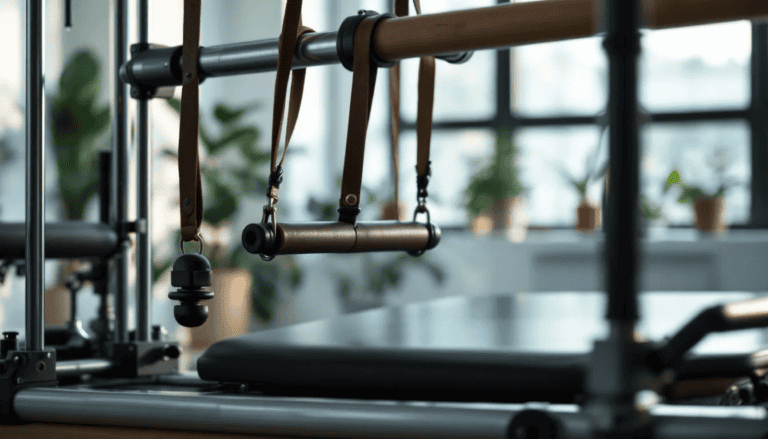
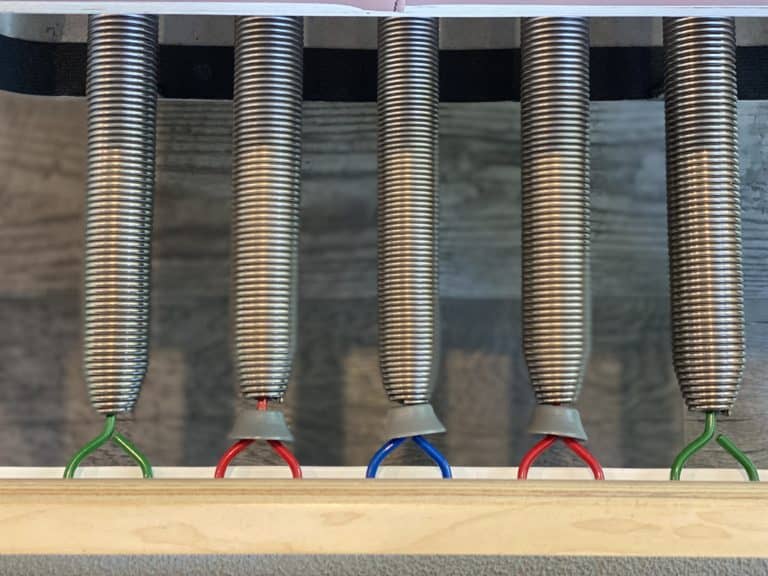
To understand how pilates and strength training work together, we first need to define what they actually do for our bodies. Many people view Pilates as “just stretching,” but that is a major myth. At its core, Pilates is a method of exercise that focuses on alignment, centering, breath, and flowing movement. It was originally designed by Joseph Pilates using springs and pulleys to provide resistance—much like the equipment we use today.
So, Is Pilates resistance training? The answer is a resounding yes. Resistance training is any exercise where your muscles must overcome an opposing force. In Pilates, that force comes from your own body weight or from the tension of springs on a Reformer or Wunda Chair.
However, there is a difference between general resistance and “strength training” aimed at hypertrophy (muscle growth). Traditional strength training relies on progressive overload—systematically increasing the weight, frequency, or number of repetitions in your routine. To see significant gains in muscle size, experts recommend lifting at least 60-70% of your one-rep max.
Understanding Resistance vs. Strength
While both modalities involve resistance, they challenge the body differently. In our studio, we see how Pilates acts as a “magnifying glass” for every muscle fiber. It forces you to find the tiny stabilizer muscles that often get ignored during a heavy bench press or squat.
- Strength Training: Typically focuses on larger muscle groups (the “movers”) and uses external weights like dumbbells, barbells, or machines. It is the gold standard for building raw power and muscle mass.
- Pilates: Focuses on the “stabilizers”—the deep core, the muscles around the spine, and the small muscles that support your joints. It uses springs to provide variable tension, which is often more joint-friendly than heavy iron.
If you are curious about how these methods fit into your budget or schedule, you can check out More info about services and rates to see how we structure our sessions to bridge this gap.
The Science of Muscle Growth
Why do we need both? The science tells us that our bodies are in a constant state of “use it or lose it.” Starting in our 30s, we begin to lose muscle mass (sarcopenia). This loss accelerates after age 60, leading to a higher risk of falls, metabolic issues, and decreased bone density.
Scientific research on bone density and strength from Harvard Health highlights that resistance training is essential for stimulating osteoblast activity—the cells that build bone. While Pilates is excellent for posture and core, the mechanical stress of traditional weight training is often more efficient for bone adaptation and metabolic health.
Interestingly, when you start a new routine, the improvements you feel in the first 6-8 weeks aren’t actually from bigger muscles; they are neural adaptations. Your brain is simply getting better at telling your muscles how to fire. True muscle changes take at least three months of consistent training. Combining pilates and strength allows you to master those neural connections faster, making your heavy lifting more efficient from day one.
| Feature | Pilates | Strength Training |
|---|---|---|
| Primary Focus | Core, stability, alignment | Hypertrophy, power, bone density |
| Resistance Source | Springs, gravity, bodyweight | Dumbbells, barbells, machines |
| Movement Style | Slow, controlled, flowing | Explosive or steady repetitions |
| Key Benefit | Injury prevention & mobility | Metabolic health & raw strength |
Why You Should Combine Pilates and Strength Training
We often hear clients ask, “Can’t I just pick one?” You could, but you’d be leaving results on the table. Think of strength training as the engine of a car and Pilates as the alignment and suspension. You can have a massive engine, but if your wheels are out of alignment, you aren’t going to win any races—and you’ll likely break something.
One of the biggest reasons to integrate these two is injury prevention. It is well-documented that Pilates increases performance by stabilizing joints and improving balance. By strengthening the deep stabilizers around the hips, shoulders, and spine, you create a “shield” that protects your joints when you go to lift heavy weights in the gym.
Correcting Imbalances and Posture
Most of us spend our days hunched over desks or phones, leading to “text neck” and tight hip flexors. Traditional weightlifting can sometimes exacerbate these issues if we aren’t careful. For example, if you have a rounded upper back, your bench press form will suffer, potentially leading to shoulder impingement.
Pilates focuses on the kinetic chain—the idea that no muscle works in isolation. We work on:
- Spinal Alignment: Decompressing the vertebrae and finding “neutral spine.”
- Deep Stabilizers: Engaging the transversus abdominis (your internal corset).
- Flexibility and Mobility: Ensuring your joints have the range of motion needed to perform a full-depth squat or overhead press safely.

Enhancing Athletic Performance
If you think Pilates is just for “toning,” tell that to the pro athletes. WNBA legend Sue Bird uses Pilates to maintain her core strength and posture, allowing her to compete at an elite level for decades. NFL players, including stars from the Kansas City Chiefs and Los Angeles Rams, have integrated Pilates into their offseason regimens to stay nimble and strengthen those “deeper” muscles that traditional gym machines might miss.
By improving your mind-body awareness, Pilates teaches you how to recruit the right muscles at the right time. This leads to higher power output in the gym because you aren’t “leaking” energy through a weak core or unstable joints.
How to Integrate Pilates and Strength into Your Weekly Schedule
The key to a successful pilates and strength routine is balance. You don’t want to overtrain, but you need enough volume to see results. Public health authorities generally recommend working all major muscle groups 2-3 times per week.
A great way to start is by looking at a Sample weekly schedule to see how classes can be spaced out. We recommend at least 48 hours of rest between heavy lifting sessions for the same muscle group, which makes those “off” days the perfect time for a Pilates session.
Programming for Beginners vs. Advanced
How you start depends on your current fitness level.
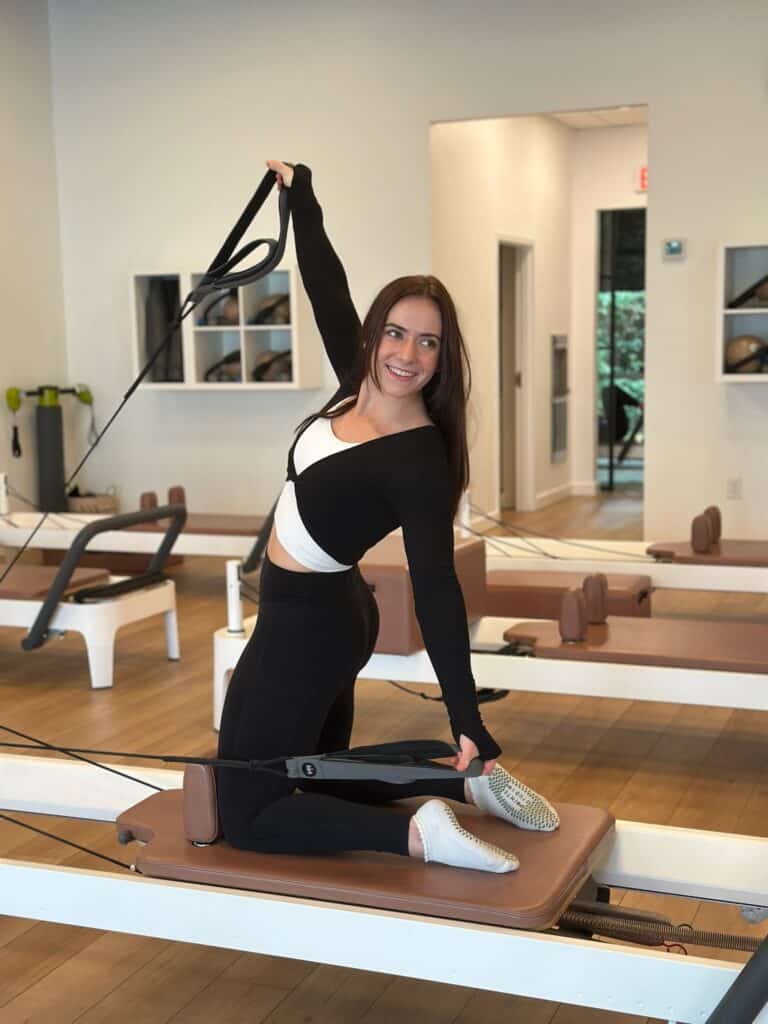
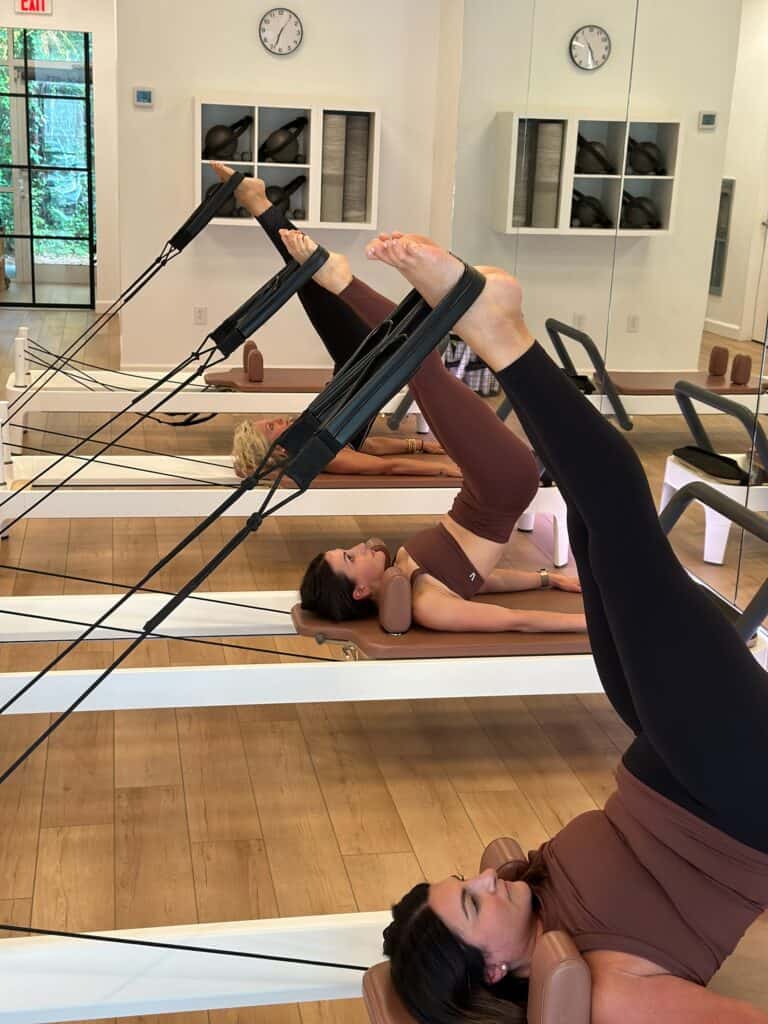
- For Beginners: We suggest starting with machine-based exercises. In the gym, this means using weight machines that guide your path of motion. In the Pilates studio, this means the Reformer. The springs provide support and feedback, helping you learn the movements before you try to stabilize free weights. If you want a more personalized introduction, you can find More info about private sessions where we can tailor the resistance to your specific needs.
- For Advanced Athletes: You can begin to blend the two in the same session. Try using 10-15 minutes of Pilates as a “primer” to activate your core and glutes before moving into heavy deadlifts or squats.
The Ideal Weekly Workout Split
A well-rounded routine for longevity and health should also include cardiovascular work. The US Physical Activity Guidelines recommend 150 minutes of moderate-intensity aerobic exercise per week.
A sample “Hybrid” week might look like this:
- Monday: Full-body strength training (weights)
- Tuesday: Reformer Pilates (focus on core and mobility)
- Wednesday: Active recovery (30-minute walk or light cardio)
- Thursday: Full-body strength training (weights)
- Friday: Reformer Pilates (focus on balance and stability)
- Saturday: Moderate cardio (hiking, swimming, or cycling)
- Sunday: Rest and recovery
Best Movements to Blend Pilates and Strength Principles
You don’t always have to keep your workouts separate. Some of the best results come from exercises that use the control of Pilates with the load of strength training.
Lower Body Power and Stability
To improve your squat depth and hip health, we love combining these movements:
- Reverse Nordic: This is a fantastic move for quad strength and hip flexor mobility. Start in a high-kneeling position and slowly lean your torso back toward your heels while keeping a straight line from your knees to your head. It builds “eccentric” strength, which is vital for preventing knee injuries.
- Clamshells with Internal/External Rotation: A staple in our studio, this primes the hips and adductors. Adding a resistance band makes this a potent strength move that protects your knees during heavy Bulgarian split squats.
Upper Body Control and Core
- Scapular Pushups: This is a classic “mat Pilates” move that has huge payoffs for the bench press and deadlift. By learning how to protract and retract your shoulder blades without bending your elbows, you learn how to “pack your lats.” This creates a stable base for lifting heavy loads.
- The Teaser on the Wunda Chair: The Wunda Chair has some of the strongest springs in the room. Performing the Teaser (a V-sit position) while controlling the pedal on the chair requires immense upper body and core integration.
- Hanging Pull-ups on the Cadillac: For those looking to build serious upper body strength, the Cadillac apparatus allows for hanging exercises that challenge your grip and back muscles far more than a standard gym pull-up bar because of the added stability requirements.
Frequently Asked Questions about Pilates and Strength
Does Pilates and Strength Training Build Muscle Differently?
Yes. Strength training is more efficient for hypertrophy (building muscle size) because it allows for higher external loads. Pilates builds muscular endurance and “functional” strength—the kind that helps you carry all the groceries in one trip without straining your back. By doing both, you get the aesthetic benefits of weightlifting and the structural integrity of Pilates.
Can beginners safely combine these modalities?
Absolutely! In fact, we recommend it. Starting with Pilates helps beginners develop the core strength and body awareness needed to lift weights safely. It reduces the risk of common “newbie” injuries caused by poor form or over-ambition with heavy weights. The key is professional guidance to ensure your alignment is correct from the start.
How often should I do Pilates and Strength training each week?
For most people, the “sweet spot” is 2 sessions of strength and 2 sessions of Pilates per week. This allows for enough frequency to trigger muscle growth and neural adaptations while providing enough recovery time to prevent burnout.
Conclusion
Your fitness journey shouldn’t be a choice between being “strong” or being “flexible.” By giving your routine a Pilates makeover, you are investing in a body that can handle heavy loads today and stay mobile for decades to come.
At Pilates of Charleston, we specialize in this integration. Our boutique studio in Mount Pleasant, SC, was voted the best in 2023 and 2024 because we focus on high-quality instruction for all levels. Whether you are a professional athlete looking for an edge or a beginner wanting to move without pain, our Balanced Body Allegro 2 Reformers and expert instructors are here to help you bridge the gap between pilates and strength.
Book your first session today and discover how the power of the Reformer can transform your strength routine. Let’s grow stronger, together!