The Ultimate Guide to Achieving Perfect Posture with Pilates
Why Pilates for Good Posture is the Ultimate Solution
At its core, pilates for good posture is about more than just “standing up straight.” It is a sophisticated system of movement designed to return the body to its natural, balanced state. While many fitness trends focus on surface-level muscles, Pilates dives deeper into the “Powerhouse”—the collective group of muscles including the abdominals, lower back, pelvic floor, and hips.
When we talk about What is Pilates?, we are describing a method that prioritizes spinal decompression and core stabilization. Most of our modern aches come from gravity compressing our vertebrae. Pilates counteracts this by teaching you to find “length” in the spine, creating space between the discs and allowing the nervous system to function without interference.
The science supports this approach. Research on how studio-style Pilates improves neck pain and well-being indicates that consistent practice significantly reduces disability and discomfort. By strengthening the deep neck flexors and the muscles surrounding the shoulder blades, Pilates provides the “internal scaffold” needed to support the weight of your head—which, fun fact, weighs about 10 pounds!
Furthermore, Pilates builds an incredible level of body awareness. In our Mount Pleasant studio, we often hear clients say they “caught themselves slouching” while grocery shopping or driving down Coleman Boulevard. This mental recalibration is the secret sauce; you aren’t just exercising for an hour; you are training your brain to recognize and correct poor alignment in real-time.
Addressing Common Postural Issues with Pilates
Modern life has gifted us with several “posture archetypes” that lead to chronic pain. Fortunately, the benefits of Pilates include targeted solutions for each:
- Tech Neck (Forward Head Posture): Constant device use shifts the head forward, straining the cervical spine. Pilates strengthens the deep stabilizers of the neck and opens the chest to bring the ears back over the shoulders.
- Rounded Shoulders: Hours at a computer tighten the pectorals and overstretch the upper back. We focus on “posterior chain” exercises that “knit” the shoulder blades together and down.
- Anterior Pelvic Tilt: Sitting for long periods tightens hip flexors and weakens glutes, causing the pelvis to tip forward and the lower back to arch excessively. Pilates restores a “neutral pelvis” by balancing the strength between the front and back of the hips.
- Slouching: This general collapse of the mid-back compresses the lungs and organs. Pilates exercises like the “Spine Stretch” teach you to lift up and out of your hips, creating a taller, more energized silhouette.
The Health Benefits of Maintaining Proper Alignment
Good posture isn’t just an aesthetic goal; it is a vital component of your internal health. Harvard research on how posture affects digestion and heartburn suggests that slouching after a meal puts undue pressure on the abdomen, potentially leading to acid reflux and slowed digestion. By sitting and standing tall, you give your internal organs the “room to breathe” they need to function optimally.
Other benefits include:
- Improved Breathing Capacity: A slumped torso prevents the diaphragm from fully expanding. Correcting your posture allows for deeper, more oxygen-rich breaths, which can lower stress levels and boost energy.
- Reduced Joint Pain: When your skeleton is aligned, your weight is distributed evenly. This takes the “load” off your knees and lower back and puts it onto your muscles, where it belongs.
- Enhanced Circulation: Proper alignment ensures that blood and lymph can flow freely throughout the body.
- Boosted Confidence: There is a powerful psychological link between posture and mood. Standing tall literally changes your hormonal profile, making you feel more assertive and capable.
Foundational Pilates Exercises for Posture
To see lasting changes, consistency is key. We recommend practicing these movements 3-4 times a week. The goal is to strengthen the posterior chain—the muscles along the back of your body—which act as the “brakes” against our natural tendency to slump forward.
A vital part of this process is mastering your Technique Tip Tuesday: Ribs & Abs. In Pilates, we don’t just “crunch” the abs; we learn to knit the ribs together and pull the navel toward the spine. This creates a solid cylinder of support that protects the lower back and encourages spinal mobility.
Essential Mat Moves for Daily Posture Correction
You can start improving your posture today with these fundamental mat exercises:
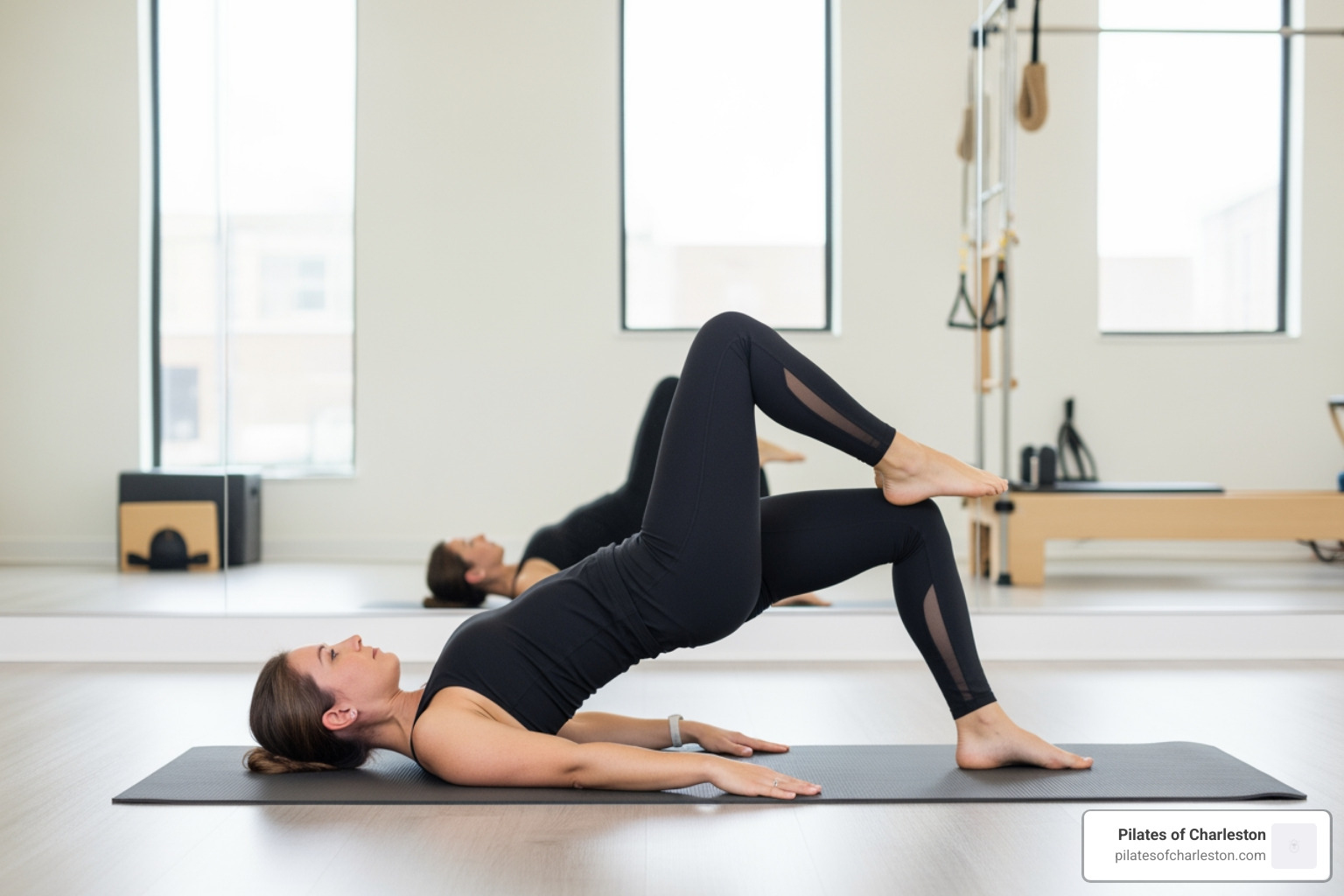
- Shoulder Bridge: Lie on your back with knees bent and feet flat. Exhale as you peel your spine off the mat, one vertebra at a time, until you form a straight line from knees to shoulders. This strengthens the glutes and hamstrings, which are essential for pelvic stability.
- Chest Opener: While standing or kneeling, reach your arms behind you and interlace your fingers (or hold a strap). Gently lift your chest toward the ceiling. This counteracts the “closed” position of desk work.
- Plank: Whether on your knees or toes, a proper Technique Tip Tuesday: Planks is the ultimate posture builder. It requires every muscle in the body to work together to maintain a straight line, teaching the body how to resist the pull of gravity.
- Swimming: Lie on your stomach with arms and legs extended. Lift opposite arm and leg simultaneously, then switch quickly as if swimming. This targets the multifidus and erector spinae—the tiny muscles that keep your spine upright.
- Wall Roll-down: Stand with your back against a wall. Slowly peel your spine away from the wall, bone by bone, then roll back up. This is a fantastic way to check your alignment and find “neutral.”
- Spine Stretch: Sit tall with legs extended. Reach forward as if reaching over a giant beach ball. This creates “length” in the spine and stretches the tight muscles of the lower back.
Reformer vs. Mat: Which is Best for Your Spine?
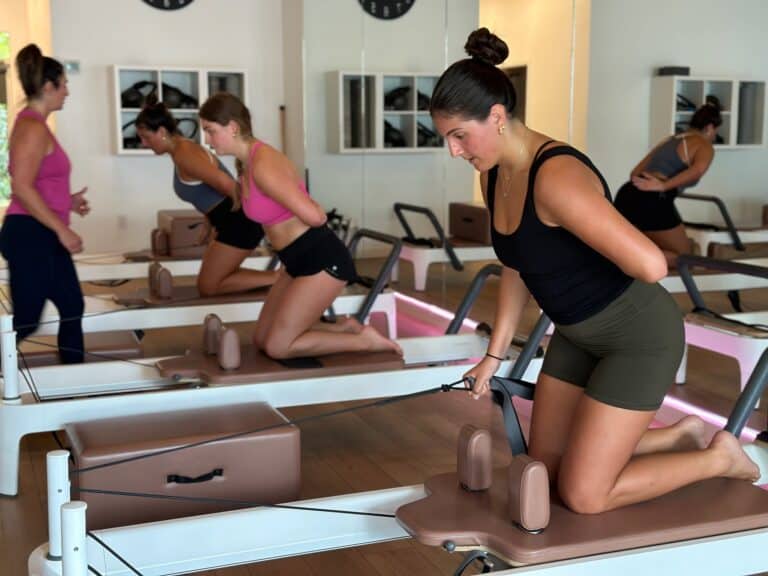
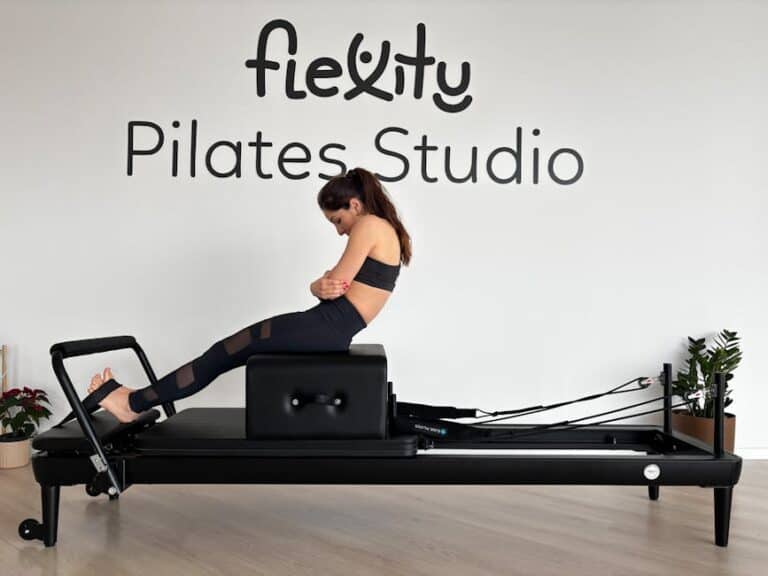
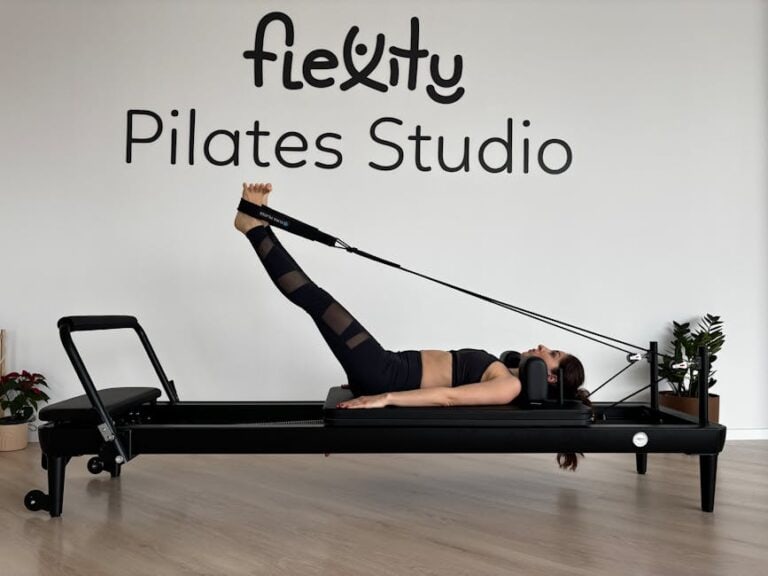
While mat Pilates is a fantastic way to build a home routine, many of our Charleston clients find that the Reformer offers a “fast track” to better posture. The Reformer uses a system of springs and pulleys to provide resistance that the mat simply cannot replicate.
| Feature | Mat Pilates | Reformer Pilates |
|---|---|---|
| Resistance | Body weight only | Adjustable spring tension |
| Support | You must support your own weight | The carriage provides a stable base |
| Feedback | Harder to tell if you are “off-center” | Instant feedback if one side is working harder |
| Focus | Great for core endurance | Excellent for eccentric muscle loading |
When asking What Kind of Workout is Pilates?, the answer often depends on the equipment. On the Reformer, the spring tension acts as a “feedback loop.” If you are pushing more with your right leg than your left, the carriage will let you know. This is crucial for correcting the muscle imbalances that cause one shoulder to sit higher than the other or one hip to hike up.
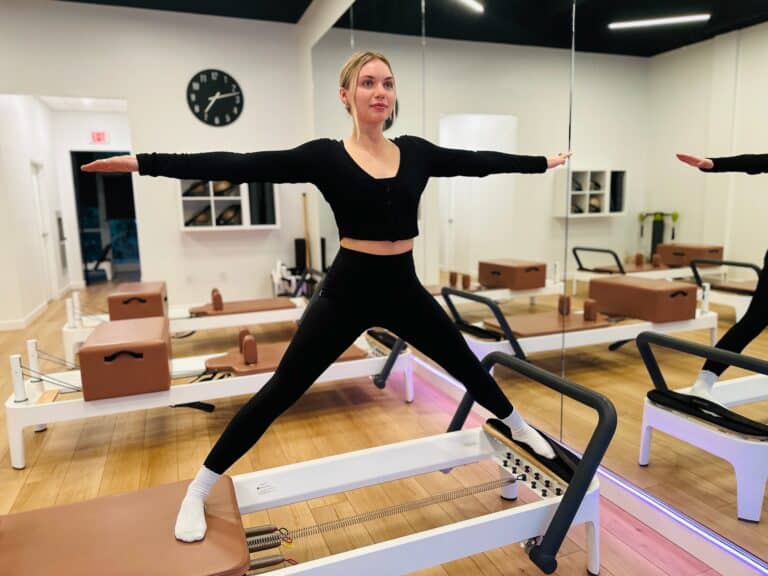
Furthermore, the Reformer allows us to focus on Foot Alignment. Believe it or not, your posture starts at your feet. If your arches are collapsing or your ankles are tight, it travels up the “kinetic chain” to your knees, hips, and eventually your neck. The Reformer’s footbar allows for precise footwork that builds a strong foundation for the rest of your body.
Practical Tips for Better Posture in Daily Charleston Life
Your hour at the studio is only one part of the equation. To truly master pilates for good posture, you must take the principles with you into your daily Mount Pleasant lifestyle.
- The “Helium Balloon” Visualization: Imagine a string attached to the crown of your head, gently pulling you toward the sky. This simple thought, a favorite of Joseph Pilates, instantly decompresses the spine and tucks the chin.
- Desk Ergonomics: If you work in an office in Downtown Charleston, ensure your monitor is at eye level. If you have to look down, your neck muscles have to work ten times harder to hold your head up.
- Active Sitting: Don’t just “dump” your weight into your chair. Sit on your “sit bones” and keep your feet flat on the floor. Use your core to hold yourself up rather than relying entirely on the back of the chair.
- Breathing Techniques: When you feel yourself slouching, take a deep “lateral” breath into your ribs. This expansion naturally widens the collarbones and resets your posture.
- Walking Habits: When walking the Ravenel Bridge, think about “pushing the ground away” with your feet and keeping your gaze on the horizon rather than your toes.
Frequently Asked Questions about Pilates for Good Posture
How quickly will I see results from pilates for good posture?
Most people notice an immediate difference in how they “feel” after just one session—usually a sense of being taller or “lighter.” For visible, lasting changes, the standard timeline is 4 to 8 weeks of consistent practice (2-3 times per week). By the 10th session, your muscle memory begins to take over, making good posture feel more natural than slouching.
Is Pilates safe for beginners with back or neck pain?
Absolutely. In fact, many people start Pilates specifically to address chronic pain. When comparing Pilates vs Yoga – What’s the Real Difference?, Pilates is often preferred for those with back issues because of its focus on controlled, small movements and spinal stabilization. However, we always recommend starting with professional guidance or private sessions if you are managing an injury, so our instructors can provide necessary modifications.
Do I need special equipment to start pilates for good posture?
To start at home, all you need is a mat and comfortable clothing. However, the studio environment offers significant advantages. Our Balanced Body Allegro 2 Reformers provide the resistance and support needed to target deep postural muscles that are difficult to reach with bodyweight exercises alone. Plus, having a set of expert eyes on your form ensures you aren’t accidentally reinforcing bad habits.
Conclusion: Stand Taller in Mount Pleasant
Achieving perfect posture isn’t about being rigid or stiff; it’s about finding the strength and flexibility to move through life with ease. At Pilates of Charleston, we are more than just a fitness studio—we are a community dedicated to helping you feel your absolute best. Whether you are looking to eliminate “tech neck,” recover from a back injury, or simply want to walk with more confidence, our expert instructors are here to guide you every step of the way.
We invite you to experience the difference that a contemporary, results-driven approach can make. Stop by our boutique Pilates Studio in Charleston and see why our clients leave every class feeling stronger and standing taller.
Ready to transform your posture and your life?
Book your first session today!
Pilates of Charleston 1150 Hungryneck Blvd, Suite C Mount Pleasant, SC 29464 (843) 608-8660